Crocs Uncover

Bizarre Species

miércoles, 3 de junio de 2009

China's Elephant Man


Huang and his family


A man with a 50 pound tumor on his face arrives at the hospital with his sister to undergo life-changing surgery.

Known as "China's Elephant Man," Huang Chuncai suffers from exceptionally large tumors that have stunted his growth, left his bones undeveloped, caused his spine to buckle and restricted his breathing. Now, Huang undergoes a risky surgery.


Little Huang reminisces with Huang about when he used to go to school here.

Ancient Death-Smile Potion Decoded?


A fourth-century B.C. Phoenician mask found in Tunisia displays a grin not unlike those seen on victims of an ancient Phoenician "sardonic grin" potion administered on the island of Sardinia.

Scientists in May 2009 said they had finally uncovered the source of the potion's lethal, smile-inducing effects: the hemlock water-dropwort plant.


Thousands of years before the Joker gassed comic book victims into a grinning death, Phoenician colonists on the island of Sardinia (map) were forcing smiles on the faces of the dead.

Now scientists say they know just how the ancient seafaring traders created the gruesome smiles some 2,800 years ago—not with a toxic gas like Batman's nemesis but with a plant-based potion.

And someday that plant might be used to Botox-like effect, perhaps reducing rather than adding smile lines, the researchers speculate.

Ancient Death Grins

By the eighth century B.C., Homer had coined the term "sardonic grin"—"sardonic" having its roots in "Sardinia"—in writings referring to the island's ritual killings via grimace-inducing potion.

Elderly people who could no longer care for themselves and criminals "were intoxicated with the sardonic herb and then killed by dropping from a high rock or by beating to death," according to the new study.

For centuries the herb's identity has been a mystery, but study leader Giovanni Appendino and colleagues say they have discovered a sardonic grin-inducing compound in a plant called hemlock water-dropwort.

The white-flowered plant grows on celery-like stalks along ponds and rivers on the island, now part of Italy.

Modern Suicide, Ancient Mystery

About a decade ago, a Sardinian shepherd committed suicide by eating a hemlock water-dropwort, leaving a corpse with a striking grin.

The death spurred study co-author Mauro Ballero, a botanist at the University of Cagliari in Sardinia, to study every dropwort-related fatality on the island in recent decades.

For the new study, Ballero and colleagues detailed the molecular structure of the plant's toxin and determined how it affects the human body.

Study leader Appendino, an organic chemist from the Università degli Studi del Piemonte Orientale in Italy, said, "The compound is highly toxic and causes symptoms similar to those described by the ancients for the sardonic smile, including facial paralysis."

(See pictures of the Phoenicians' enduring legacy around the Mediterranean.)

Hemlock water-dropwort "was already known to contain neurotoxins and was the most likely candidate for the sardonic herb," Appendino said.

The hairy buttercup (aka the Sardinian buttercup) was also a candidate, but that plant doesn't grow in the damp places mentioned in ancient texts, nor does it make sense in terms of its toxic properties, Appendino said.

"Besides, Sardinia is the only place all over the Mediterranean where [hemlock water-dropwort] grows," he added.

A Better Botox?

A member of the deadly hemlock family, the herb is especially dangerous because of its fragrant smell and sweet-tasting roots.

"Generally poisonous plants are bitter or in some way repel people," Appendino said.

Hemlock water-dropwort "is only the second case I know of a toxic plant that is actually attractive to our senses. People might easily eat it in a potion," he added—or perhaps apply it in a lotion.

Appendino speculates that the plant may prove to have a cosmetic application.

"It relaxes the muscles," he said, "so it removes wrinkles."

Findings published in the Journal of Natural Products.

The Voice of Space Flight


Though Paul Haney’s voice hasn’t been heard in a NASA broadcast since 1969, it echoes in the minds of generations of Americans whenever we think of mankind’s voyage into space.

Haney, who died last Thursday at 80, was the original broadcast voice of Mission Control. He provided live commentary during the Apollo and Gemini spaceflights of the 1960s, his measured tones a perfect counterpoint to the moments’ natural drama.

My favorite Haney recording comes from the liftoff of Apollo 10, the second manned mission to the moon. In evenly measured cadences he segues from the astronauts’ last pre-flight preparations to the countdown itself, his voice rising only when he can no longer be heard over the rockets’ rumble.

If you listen carefully, you can hear a barely-restrained excitement and nervousness at the edges of his voice. It’s at once technocratic and boyish, awed and frightened, proud and humbled — the very essence of a journey from Earth’s safe harbor into the frigid majesty of space, aboard a fragile metal bubble.

Haney was fired in 1969 after clashing with agency officials over public access to space program information. But his voice will live forever.

Space 2.X: The Private Rocket Race Takes Off


Looking less like a lab full of rocket scientists and more like Google, SpaceX foregoes offices and private meeting rooms. Instead the company opts for an open floor plan and glass-paneled conference rooms. Don’t be fooled, those are rocket scientists.


HAWTHORNE, California – Building a successful startup in Silicon Valley is hard, but it’s not rocket science. Unless you’re SpaceX.

Eschewing the traditional startup trappings of two college grads eating ramen, watching Adult Swim and coding until the wee hours of the night, SpaceX instead employs hundreds of brainiacs and builds its rockets in a massive hangar that once housed a 747 assembly line.

Started in 2002 by PayPal founder Elon Musk, SpaceX (short for Space Exploration Technologies Corporation) brings a startup mentality to launching rockets into orbit, which until recently was almost exclusively government turf. The hope is that minimal bureaucracy, innovation and in-house manufacturing and testing can be used to put payloads into space at roughly one-tenth the cost of traditional methods.

If the company’s newest rocket, the Falcon 9, successfully completes its two scheduled launches this year, it will rendezvous with the International Space Station in 2010. After that, it will officially begin its mission as NASA’s Commercial Orbital Transportation Services platform, replacing the space shuttle as the method for transporting cargo and crew to the ISS.


An extremely accurate laser survey device, left, is used to ensure that rocket parts fall within SpaceX’s tight tolerances.

SpaceX launched its first rocket, the Falcon 1, last September, placing a dummy payload into orbit. Space enthusiasts are holding their breath to see how Falcon 9 performs.

Here’s a behind-the-scenes look at SpaceX’s facility. This is how the private sector builds a rocket capable of space travel.

Chinese Researchers Create First Pig Stem Cells


Chinese researchers said on Wednesday they had created versatile stem cells from pigs, a ground-breaking achievement that could open up new paths for combating human disease.

Doctors led by Lei Xiao, of the Shanghai Institute of Biochemistry and Cell Biology, took adult cells taken from a pig's ear and bone marrow and reprogrammed them so that they became so-called pluripotent stem cells.

These are cells that, like the coveted stem cells found in embryos, can differentiate into any type of cell in the body.

It is a technical exploit because until now, no-one has been able to achieve reprogramming using somatic cells -- cells that do not come from sperm or eggs -- from a hooved animal.

But the main interest lies in fundamental medical research, as it offers the hope of using the pig as a test bench for disease and a source of transplant material, Xiao said.

The pig is close to the human in many biological functions and with some organs that are similar in size.We could use embryonic stem cells or induced stem cells to modify the immune-related genes in the pig to make the pig organ compatible to the human immune system," Xiao said in a press release.

"Then we could use these pigs as organ donors to provide organs for patients that won't trigger an adverse reaction from the patient's own immune system."

Another possibility would be to modify genes in lines of pig stem cells so that they replicate flaws in human genes that cause diabetes and other diseases, he suggested.

The modified stem cells could then be used to generate pigs with the same disorder, thus providing researchers with a model on which to test new therapies.

The Chinese team tucked a basket of reprogramming genes inside a virus to infect the adult cells and return them to their naive, versatile state.

Tests on the cells showed they were capable of differentiating into the three fundamental layers of tissue in an early embryo.

The paper is published in the Journal of Molecular Cell Biology.

Work on similar lines is being carried out on human cells, first achieved in 2007 by Shinya Yamanaka of Kyoto University

Mammoths Roasted


Central Europe's prehistoric people would likely have been amused by today's hand-sized hamburgers and hot dogs, since archaeologists have just uncovered a 29,000 B.C. well-equipped kitchen where roasted gigantic mammoth was one of the last meals served.

The site, called Pavlov VI in the Czech Republic near the Austrian and Slovak Republic borders, provides a homespun look at the rich culture of some of Europe's first anatomically modern humans.

While contemporaneous populations near this region seemed to prefer reindeer meat, the Gravettian residents of this living complex, described in the latest issue of the journal Antiquity, appeared to seek out more super-sized fare.

"It seems that, in contrast to other Upper Paleolithic societies in Moravia, these people depended heavily on mammoths," project leader Jiri Svoboda told Discovery News. Svoboda, a professor at the University of Brno and director of its Institute of Archaeology, and colleagues recently excavated Pavlov VI, where they found the remains of a female mammoth and one mammoth calf near a 4-foot-wide roasting pit. Arctic fox, wolverine, bear and hare remains were also found, along with a few horse and reindeer bones.

The meats were cooked luau-style underground. Svoboda said, "We found the heating stones still within the pit and around."

Boiling pits existed near the middle roaster. He thinks "the whole situation -- central roasting pit and the circle of boiling pits -- was sheltered by a teepee or yurt-like structure."

It's unclear if seafood was added to create a surf-and-turf meal, but multiple decorated shells were unearthed. Many showed signs of cut marks, along with red and black coloration. The scientists additionally found numerous stone tools, such as spatulas, blades and saws, which they suggest were good for carving mammoths.

Perforated, decorative pebbles, ceramic pieces and fragments of fired clay were also excavated. The living unit's occupants left their fingerprints on some of the clay pieces, which they decorated with impressions made from reindeer hair and textiles. Some items might have held "magical" or ritualistic significance, according to the scientists. One such artifact looks to be the head of a lion.


"This carnivore head was first modeled of wet clay, then an incision was made with a sharp tool, and finally the piece was heated in the fire, turned into some kind of ceramic," Svoboda explained. "We hypothesize that this may be sympathetic magic."

"Sympathetic magic" often involves the use of effigies or fetishes, resembling individuals or objects, and is meant to affect the environment or the practitioners themselves.

Archaeologist Erik Trinkaus of Washington University supports the new study, saying the site was "excavated meticulously" by Svoboda and his team.

"This is one more example, in this case from modern detailed excavation and analysis, of the incredibly rich human behavior from this time period," Trinkaus told.

martes, 2 de junio de 2009

A Listening Party for Nature


Scientists use many techniques to study natural habitats, but they rarely listen to nature.

To some biologists, sounds are more than an aural accompaniment to field trips: They convey information that traditional field surveys are hard-pressed to uncover. Now scientists are using sounds to tap into the pulse of ecosystems and monitor their health.

"The microphone is one of the most important biological sensors ever invented," said Michigan State University ecologist Stuart Gage. "It just hasn’t been properly used for interpreting ecosystem dynamics."

Scientists already study the sounds of individual animals, but such research focuses on particular species rather than entire ecosystems. By analyzing recordings made by microphones arrayed throughout habitats, Gage and other bioacousticians are looking for new representations of species balances and relationships.

The techniques and methods are still being refined, but audio tools could make it possible to easily conduct otherwise-difficult long-term studies of biodiversity, animal behavior, human environmental impacts and the effects of climate change on nature.


"I want to interpret the quality and character of the ecosystem," said
Gage. "I’m not particularly interested in species. I’m interested in the biodiversity, species timing, habitat disturbance and communications issues. It’s using sound as a metric to look at ecosystem dynamics."

Gage started his career as an ornithologist trained to identify birdcalls. Eventually he realized that bird song was only a part of nature’s symphony. "Acoustics were sending me a signal about the health of the environment and the type of ecosystem I was in," he said.

Sometimes these signals are otherwise hidden. In 1988, Gage and bioacoustics pioneer Bernie Krause — father of the term "biophony" and originator of the niche hypothesis, according to which nature’s audio spectrum is finely divided between species — recorded a patch of Sierra forest scheduled to be selectively logged.


We were told it would have no impact on organisms," said Krause. "To our eye and to the camera, it looks like it didn’t." But when they went back the next year and in 2003, "the sound had changed. It’s depressing to hear how little there is now. The diversity and density was gone, and it’s still gone today."

Gage and his students are now deploying solar-powered microphones in plots throughout the Muskegon River watershed. The results are sent wirelessly to a central computer, synchronized and analyzed.

"Rather than going into the field and using traditional, labor-intensive survey methods, you can deploy these in a fixed grid for a long time," said Bryan Pijanowski, a Purdue University forestry professor and Gage’s former student.


Gage and Pijanowski use the diversity of audio patterns as a surrogate for biodiversity, or the richness of life in an ecosystem — a vital indicator of environmental health, but difficult to measure, requiring meticulous and necessarily imperfect visual observations.

"We have very few long-term studies on these sorts of things, very little information, especially across large spatial scales," said
Pijanowski. "We’ve missed this whole dimension that we could measure that makes it easier to look at and monitor biodiversity across landscapes and long periods of time."

Even at smaller geographical and chronological scales, this is difficult. Almo Farina, an ecologist at Italy’s Urbino University, uses sound recordings to study birds; traditional methods, he said, "are strongly biased by the human capacity to recognize birds, to maintain attention for a long time, and by human intrusion.


Images: A recorder set up by Stuart Gage and Bernie Krause in Sequoia National Park; Bryan Pijanowski; proposed sensor grid in the Muskegon River watershed, courtesy of Stuart Gage; a visualization of robin calls in a one-hectare plot of beech forest in the Appenines, from Almo Farina; sonograms from Borneo, St. Martin and the Amazon Basin from Bernie Krause’s "Loss of Natural Soundscapes Within the Americas."

Farina’s own recordings — made by a grid of field sensors and a recorder trawled from a cable car across an Appenine mountainside — let him explore the relation between bird activities and the surrounding soundscape.

"I want to understand how acoustic activity in one site is connected with the song activity of another site," he said. "Some birds sing only after another species becomes silent, and vice versa. When you find acoustic overlap, this means that the community could be affected by some habitat disturbance."

Nature Conservancy ecologist Patrick Gonzalez said that bioacoustics sounds promising, though "it would require extensive field surveys to validate."

"What we’re talking about here is so new and out of the box that most ecologists look at me and say, ‘Huh?’" said Pijanowski.

Some ecologists want to construct a nationwide natural audio surveillance system, said Pijanowski. He’s already deployed sensors around his home in Tippecanoe County, Indiana.

"It’s a canary in a cage tool," he said. "Those signal potential disturbances that might alert a natural resource manager. They could monitor ecosystems in real-time."

Can Send Secret Messages?


By combining cutting-edge chemistry with the ancient concept of signaling flares, researchers have made an information-dense fuse that transmits complicated messages as it burns.

The so-called “infofuse” is made from dots of lithium, rubidium and cesium laid on a line of fast-burning nitrocellulose. Different combinations of the metals produce different intensities and wavelengths of light, from visible to infrared. These characteristics can be precisely controlled, allowing the fuses to convey a form of chemical Morse code.

“If somebody is stranded in an unfriendly environment, they may need to communicate without attention-drawing electromagnetic frequencies,” said chemist David Walt of Tufts University. “The infofuses are designed to send signals that are visible in a region of the spectrum that human vision cannot detect, but can be picked up using detectors optimized for that part of the spectrum.”

Infrared-burning flares are the most obvious immediate possible application of the research, which was funded by the Defense Advanced Research Projects Agency and recently described in the Proceedings of the National Academy of Sciences. Other uses, however, will likely be found.

For an environmental biosensor, “the signal would change as a function of something that binds to the fuse itself. Imagine you’d like to know what the concentration of some air contaminant is. The fuse would go off and send a signal modulated by the concentration of the contaminant,” said Walt.

For now, a firecracker-scale infofuse can be detected at distances of up to one-third of a mile. But as researchers refine the technology, infofuses “could open up new opportunities in information technology,” wrote John Rogers, a University of Illinois at Urbana-Champaign material scientist, in a separate PNAS article.

Wiping Out The World's Mass Migrations: First Analysis Of The Effect Of Habit Changes On Migrating Grazers


These are pronghorn (Antilocapra americana) running in snow. (Credit: J. Berger/WCS)

Densely packed wildebeests flowing over the Serengeti, bison teeming across the Northern Plains—these iconic images extend from Hollywood epics to the popular imagination. But the fact is, all of the world's large-scale terrestrial migrations have been severely reduced and a quarter of the migrating species are suspected to no longer migrate at all because of human changes to the landscape. A recently published research paper highlights this global change and presents the first analysis of the dwindling mass migrations.

"Conservation science has done a poor job in understanding how migrations work, and as a result many migrations have gone extinct," says Grant Harris of the Center for Biodiversity and Conservation at the American Museum of Natural History, first author of the paper in Endangered Species Research. "Fencing, for example, blocks migratory routes and reduces migrant's access to forage and water. Migrations can then stop, or be shortened, and animal numbers plummet."

Migrations of large-bodied herbivores (also called ungulates) occur when animals search for higher quality or more abundant food. Ecologically, there are two primary drivers of food availability. In temperate regions of the world, higher-quality food shifts predictably as the seasons change, and animals respond by moving along well-established routes. For savannah ecosystems, rain and fire allow higher-quality food to grow. This is a less predictable change that animals must track across expansive landscapes.

Human activity now prevents large groups of ungulates from following their food. Fencing, farming, and water restrictions have changed the landscape and over-harvesting of the animals themselves has played a role in reducing the number of migrants.

To assess the impact of human activity on migrations throughout the world, Harris and his co-authors gathered information on all 24 species of large (over 20 kilograms) ungulates known for their mass migrations. Animals included in the study, for example, range over Arctic tundra (Caribou), Eurasian steppes and plateaus (Chiru and Saiga), North American plains (bison and elk), and African savannahs (zebra and wildebeests). The fewest number of mass-migrating species live in the Americas, and this is the location where the most data exists. Evaluating the human impact on migratory species in Africa and Eurasia is hampered by a lack of scientific data: in Africa—where most of the large-scale migrations remain—three species have no scientific publications on their status, and in Eurasia half of the six remaining migratory species are very poorly documented.

All 24 species in the current study lost migration routes and were reduced in number of individuals. In North America, bison are still considered migratory, but their range is now restricted from the Great Plains to two small sites in Yellowstone and Alberta. Similar changes are found on other continents when human activity limits the ability of species to move to new patches of food. The analysis found even more drastic curbing for six species in particular. The springbok (Antidorcas marsupialis), black wildebeest (Connochaetes gnou), the blesbok (Damaliscus dorcas), and quagga (Equus quagga) of southern Africa; the kulan (Equus hemionus) of central Asia; and scimitar horned oryx (Oryx dammah) of northern Africa either no longer migrate or are impossible to evaluate as migratory animals.

"If we are going to conserve migrations and species, we need to identify what needs to be done: where migrations remain, how far animals move, their habitat needs and location, threats, and the knowledge gaps needed to be filled," says co-author Joel Berger of the Wildlife Conservation Society and the University of Montana. "For some of these species, such as the wildebeest and eland in Botswana, threats were identified decades ago. We as a society have made little progress at figuring out how to save migrations."

"A large part of this is an awareness issue. People don't realize what we have and are losing," says Harris. "We lose migrations and become biologically depauperate with farms and fences, even though there is no reason why humanity cannot technically and socially advance while maintaining natural phenomena. A balance can be struck—we just need to strike it."

In addition to Harris and Berger, authors on this research paper include Simon Thirgood and J. Grant Hopcraft of the Frankfurt Zoological Society in Tanzania, and Joris Cromsigt of the Mammal Research Institute at the Polish Academy of Sciences. The research was supported by the John D. and Catherine T. MacArthur Foundation, the Frankfurt Zoological Society, the Wildlife Conservation Society, and the Marie Curie Transfer of Knowledge project BIORESC.

Meteoroid Bombardment May Have Made Earth More Habitable, Says Study


Rendering of meteor falling to Earth. Large bombardments of meteoroids approximately four billion years ago could have helped to make the early Earth and Mars more habitable for life by modifying their atmospheres. (Credit: iStockphoto)

Large bombardments of meteoroids approximately four billion years ago could have helped to make the early Earth and Mars more habitable for life by modifying their atmospheres, suggests the results of a new study.
When a meteoroid from space enters a planet’s atmosphere, extreme heat causes some of the minerals and organic matter on its outer crust to be released as water and carbon dioxide (as a meteor burning up in the atmosphere) before it breaks up and hits the ground (and becomes a meteorite).

Researchers suggest the delivery of this water could have made Earth’s and Mars’ atmospheres wetter. The release of the greenhouse gas carbon dioxide could have trapped more energy from sunlight to make Earth and Mars warm enough to sustain liquid oceans.

In the new study, researchers from Imperial College London analysed the remaining mineral and organic content of fifteen fragments of ancient meteorites that had crashed around the world to see how much water vapour and carbon dioxide they would release when subjected to very high temperatures like those that they would experience upon entering the Earth’s atmosphere.

The researchers used a new technique called pyrolysis-FTIR, which uses electricity to rapidly heat the fragments at a rate of 20,000 degrees Celsius per second, and they then measured the gases released.

They found that on average, each meteorite was capable of releasing up to 12 percent of the object's mass as water vapour and 6 percent of its mass as carbon dioxide when entering an atmosphere. They concluded that contributions from individual meteorites were small and were unlikely to have a significant impact on the atmospheres of planets on their own.

The researchers then analysed data from an ancient meteor shower called the Late Heavy Bombardment (LHB), which occurred 4 billion years ago, where millions of rocks crashed to Earth and Mars over a period of 20 million years.

Using published models of meteoritic impact rates during the LHB, the researchers calculated that 10 billion tonnes of carbon dioxide and 10 billion tonnes of water vapour could have been delivered to the atmospheres of Earth and Mars each year.

This suggests that the LHB could have delivered enough carbon dioxide and water vapour to turn the atmospheres of the two planets into warmer and wetter environments that were more habitable for life, say the researchers.

Professor Mark Sephton, from Imperial’s Department of Earth Science and Engineering believes the study provides important clues about Earth’s ancient past: “For a long time, scientists have been trying to understand why Earth is so water rich compared to other planets in our solar system. The LHB may provide a clue. This may have been a pivotal moment in our early history where Earth’s gaseous envelope finally had enough of the right ingredients to nurture life on our planet.”

Lead author of the study, Dr Richard Court from Imperial’s Department of Earth Science and Engineering, adds: “Because of their chemistry, ancient meteorites have been suggested as a way of furnishing the early Earth with its liquid water. Now we have data that reveals just how much water and carbon dioxide was directly injected into the atmosphere by meteorites. These gases could have got to work immediately, boosting the water cycle and warming the planet.”

However, researchers say Mars’ good fortune did not last. Unlike Earth, Mars doesn’t have a magnetic field to act as a protective shield from the Sun’s solar wind. As a consequence, Mars was stripped of most of its atmosphere. A reduction in volcanic activity also cooled the planet. This caused its liquid oceans to retreat to the poles where they became ice.

High Arctic Mammals Wintered In Darkness 53 Million Years Ago


A hippo-like mammal known as Coryphodon was one of several ancient mammal groups that endured twilight winters in the high Arctic 53 million year ago, according to a new study led by the University of Colorado at Boulder. (Credit: Copyright American Museum of Natural History/D. Finnin)

Ancestors of tapirs and ancient cousins of rhinos living above the Arctic Circle 53 million years ago endured six months of darkness each year in a far milder climate than today that featured lush, swampy forests, according to a new study led by the University of Colorado at Boulder.
CU-Boulder Assistant Professor Jaelyn Eberle said the study shows several varieties of prehistoric mammals as heavy as 1,000 pounds each lived on what is today Ellesmere Island near Greenland on a summer diet of flowering plants, deciduous leaves and aquatic vegetation. But in winter's twilight they apparently switched over to foods like twigs, leaf litter, evergreen needles and fungi, said Eberle, curator of fossil vertebrates at the University of Colorado Museum of Natural History and chief study author.

The study has implications for the dispersal of early mammals across polar land bridges into North America and for modern mammals that likely will begin moving north if Earth's climate continues to warm. A paper on the subject co-authored by Henry Fricke of Colorado College in Colorado Springs and John Humphrey of the Colorado School of Mines in Golden appears in the June issue of Geology.

The team used an analysis of carbon and oxygen isotopes extracted from the fossil teeth of three varieties of mammals from Ellesmere Island -- a hippo-like, semi-aquatic creature known as Coryphodon, a second, smaller ancestor of today's tapirs and a third rhino-like mammal known as brontothere. Animal teeth are among the most valuable fossils in the high Arctic because they are extremely hard and better able to survive the harsh freeze-thaw cycles that occur each year, Eberle said.

Telltale isotopic signatures of carbon from enamel layers that form sequentially during tooth eruption allowed the team to pinpoint the types of plant materials consumed by the mammals as they ate their way across the landscape through the seasons, Eberle said.

"We were able to use carbon signatures preserved in the tooth enamel to show that these mammals did not migrate or hibernate," said Eberle. "Instead, they lived in the high Arctic all year long, munching on some unusual things during the dark winter months." The study was funded by the National Science Foundation.

An analysis of oxygen isotopes from the fossil teeth helped determine seasonal changes in surface drinking water tied to precipitation and temperature, providing additional climate information, said Eberle. The results point to warm, humid summers and mild winters in the high Arctic 53 million years ago, where temperatures probably ranged from just above freezing to near 70 degrees Fahrenheit, Eberle said.

The environment on central Ellesmere Island, located at about 80 degrees north latitude, was part of a much larger circumpolar Arctic region at the time, she said. It probably was similar to swampy cypress forests in the southeast United States today and still contains fossil tree stumps as large as washing machines, Eberle said.

On central Ellesmere Island in today's high Arctic -- a polar desert that features tundra, permafrost, ice sheets, sparse vegetation and a few small mammals -- the temperature ranges from roughly minus 37 degrees F in winter to 48 degrees F in summer and is the coldest, driest environment on Earth. There is sunlight in the high Arctic between October and February, and the midnight sun is present from mid-April through the end of August.

The year-round presence of mammals such as the hippo-like Coryphodon, tapirs and brontotheres in the high Arctic was a "behavioral prerequisite" for their eventual dispersal across high-latitude land bridges that geologists believe linked Asia and Europe with North America, Eberle said. Their dietary chemical signatures, portly shapes and fossil evidence for babies and juveniles in the Arctic preclude the idea of long, seasonal migrations to escape the winter darkness, she said.

"In order for mammals to have covered the great distances across land bridges that once connected the continents, they would have required the ability to inhabit the High Arctic year-round in proximity to these land bridges," Eberle said.

Instead, the animals likely made their way south from the Arctic in minute increments over millions of years as the climate shifted. "This study may provide the behavioral smoking gun for how modern groups of mammals like ungulates -- ancestors of today's horses and cattle -- and true primates arrived in North America," said Eberle, also an assistant professor in CU-Boulder's geological sciences department.

The surprising menagerie of Arctic creatures during the early Eocene epoch, which lasted from roughly 50 million to 55 million years ago, first became evident in 1975 when a team led by Mary Dawson of the Carnegie Museum of Natural History in Pittsburg discovered fossil alligator jaw bones. Since then, fossils of aquatic turtles, giant tortoises, snakes and even flying lemurs -- one of the earliest forms of primates -- have been found on Ellesmere Island, said Eberle.

The new Geology study also foreshadows the impacts of continuing global warming on Arctic plants and animals, Eberle said. Temperatures in the Arctic are rising twice as fast as those at mid-latitudes as greenhouse gases build up in Earth's atmosphere from rising fossil-fuel burning, and air temperatures over Greenland have risen by more than 7 degrees F since 1991, according to climate scientists.

"We are hypothesizing that lower-latitude mammals will migrate north as the temperatures warm in the coming centuries and millennia," she said. If temperatures ever warm enough in the future to rival the Eocene, there is the possibility of new intercontinental migrations by mammals."

Because the oldest known tapir fossils are from the Arctic, there is the possibility that some prehistoric mammals could have evolved in the circumpolar Arctic and then dispersed through Asia, Europe and North America, said Eberle. "We may have to re-think the world of the early Eocene, when all of the Arctic land masses were connected in a supercontinent of sorts," she said.

Mosquito Evolution Spells Trouble For Galapagos Wildlife


The Galapagos giant tortoise and other iconic wildlife are facing a new threat from disease, as some of the islands' mosquitoes develop a taste for reptile blood.
Scientists from the University of Leeds, the Zoological Society of London (ZSL) and the Galapagos National Park have discovered that while its mainland ancestors prefer the blood of mammals and the occasional bird, the Galapagos form of the black salt marsh mosquito (Aedes taeniorhynchus) has shifted its behaviour to feed mainly on reptiles – primarily Galapagos giant tortoises and marine iguanas.

The findings raise fears that these changes could devastate the islands' unique native wildlife if a new mosquito-borne disease is introduced - a scenario which is increasingly likely with the continuing rise in tourism.

Using genetic techniques, the researchers showed that the mosquito colonised the Galapagos around 200,000 years ago and was not introduced by humans as previously thought, giving them time to adapt to conditions in Galapagos. They have also found that unlike the mainland populations that normally live in mangroves and salt marshes along the coast, the Galapagos form of the mosquito can also breed up to 20 km inland and at altitudes of up to 700 metres. The research team believe the shift in feeding behaviour is an adaptation to life in Galapagos, since the islands had few mammal species prior to the arrival of Man some 500 years ago.

"When we started the work we thought that this species was also introduced by humans, so it was a surprise that it turned out to be so ancient," says Arnaud Bataille, the University of Leeds and ZSL PhD student who carried out the work. "The genetic differences of the Galapagos mosquitoes from their mainland relatives are as large as those between different species, suggesting that the mosquito in Galapagos may be in the process of evolving into a new species."

Mosquitoes are known to transmit important wildlife diseases, such as avian malaria and West Nile fever. While there is no evidence that such diseases are currently present on Galapagos, the widespread presence of the mosquito, and the fact that it feeds on a broad range of the native species, means that any new disease that arrives from the continent could spread rapidly to a wide variety to wildlife throughout the islands. Due to its long isolation, Galapagos wildlife is not likely to have much immunity to new diseases, so the effects could be devastating.

"With tourism growing so rapidly the chance of a disease-carrying mosquito hitching a ride from the mainland on a plane is also increasing, since the number of flights grows in line with visitor numbers" says Dr Andrew Cunningham, from the Zoological Society of London, one of the authors of the study. "If a new disease arrives via this route, the fear is that Galapagos' own mosquitoes would pick it up and spread it throughout the archipelago."

Rather than implementing control measures against Galapagos' own unique mosquito, the research team argues that it is imperative that measures are taken to avoid introducing new diseases to the islands.

The Ecuadorian government recently introduced a requirement for planes flying to Galapagos to have a residual insecticide treatment on the interior surfaces, and spraying in the hold and cabin on each flight. However, similar controls are yet to be implemented for ships.

Co-author Dr Simon Goodman, of Leeds' Faculty of Biological Sciences says: "It is absolutely vital that these control measures are maintained and carried out rigorously, otherwise the consequences could be very serious indeed."

Silver Nanoparticles Show 'Immense Potential' In Prevention Of Blood Clots


Scientists are reporting discovery of a potential new alternative to aspirin, ReoPro, and other anti-platelet agents used widely to prevent blood clots in coronary artery disease, heart attack and stroke. Their study involves particles of silver — 1/50,000th the diameter of a human hair — that are injected into the bloodstream.
Debabrata Dash and colleagues point out that patients urgently need new anti-thrombotic agents because traditionally prescribed medications too-often cause dangerous bleeding. At the same time, aging of the population, sedentary lifestyle and spiraling rates of certain diseases have increased the use of these drugs. Researchers are seeking treatments that more gently orchestrate activity of platelets, disk-shaped particles in the blood that form clots.

The scientists describe development and lab testing of silver nanoparticles that seem to keep platelets in an inactive state. Low levels of the nanosilver, injected into mice, reduced the ability of platelets to clump together by as much as 40 percent with no apparent harmful side effects.

The nanoparticles "hold immense potential to be promoted as an antiplatelet agent," the researchers note. "Nanosilver appears to possess dual significant properties critically helpful to the health of mankind — antibacterial and antiplatelet — which together can have unique utilities, for example in coronary stents."

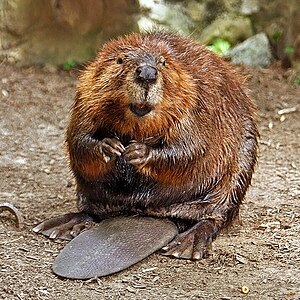
Extinct" Beavers Back in U.K. After 400 Years


After 400 years beavers are once again gnawing at British branches. But because hunting made native beavers regionally extinct, the new generation had to be shipped in from Norway.

More than 400 years after they are believed to have been eliminated from the British Isles, beavers have returned to the UK.

Wildlife conservationists re-introduced three beaver families to the Scottish wild.

Beaver families were captured in Norway last year and quarantined for six months at a centre in Devon.

The beaver families were then driven up to Knapdale Forest in Mid-Argyll, Scotland, and introduced into purpose built lodges.

Reportedly, the lodges were constructed of straw and willow, and filled with carrots and turnips. This allowed the beavers to gnaw through and enter the wild at their own pace.

Its believed the last of the British beavers were killed in the 16th century.

SOUNDBITE (English) Simon Milne, Scottish Wildlife Trust: "This is not just about bringing back an animal that was made extinct by man. It's also about restoring natural processes. Beavers manipulate the landscape on their own. It clears some of the woodland, it coppices trees, it brings in light, it creates much needed wetlands. So it's not only the beavers that win, it's lots of other species as well including dragon flies and otters and birds."


The reintroduction of beavers did draw some criticism amid concern beaver dams would hurt salmon migration in local rivers. But the Scottish Wildlife Trust insists beavers would only be released into a designated trial area.

The Norwegian beavers were chosen because they are considered to be the closest type to the beavers which existed in 16th century Britain.

Child Mummy Sacrifice


They are perfectly preserved child mummies unearthed on top of a volcano in northwest Argentina. As young as 6 years old, these three children were chosen to die as an Incan sacrifice to their gods.


Scientists examine the mummified body of a Inca child