jueves, 4 de junio de 2009

New Cloud Type Discovered?

June 3, 2009--These choppy clouds over Cedar Rapids, Iowa, in an undated picture could be examples of the first new type of cloud to be recognized since 1951. Or so hopes Gavin Pretor-Pinney, founder of the Cloud Appreciation Society.
The British cloud enthusiast said he began getting photos of "dramatic" and "weird" clouds (including the above) in 2005 that he didn't know how to define.
A few months ago he began preparing to propose the odd formations as a new cloud variety to the UN's World Meteorological Organization, which classifies cloud types.
Pretor-Pinney jokingly calls it the "Jacques Cousteau cloud," after its resemblance to a roiling ocean surface seen from below. But the cloud fan has proposed a "formal," Latin name: Undulus asperatus—roughly, "a very turbulent, violent, chaotic form of undulation," explained Pretor-Pinney, author of the new Cloud Collector's Handbook.
Asked how has such a striking cloud type could go unrecognized, Pretor-Pinney cites its rarity—and the proliferation and portability of digital cameras. "Technology has allowed us to have this new perspective on the sky."
"Essence of Maggot" Ointment to Heal Wounds Faster?

Battlefield medics hundreds of years ago were the first to notice that bloody wounds infested with maggots actually heal faster than "clean" wounds. (Above, maggots crawl across a raw steak.)
In June 2009 scientists announced that they had found the key to maggots' healing properties: an enzyme in the fluids the larvae secrete to help them prepare dead tissue for consumption.
Bandages and ointments infused with essence of maggot may soon be coming to a drugstore near you.
Battlefield medics hundreds of years ago were the first to notice that bloody wounds infested with maggots actually heal faster than "clean" wounds.
Today hospitals around the world breed selected fly larvae in sterile environments. These "medical maggots" are applied directly to wounds such as ulcers and burns, which are otherwise difficult to heal.
There is no question that the somewhat grim technique works. But how maggot therapy heals has long been a matter of debate.
The secret, according to a new study, is in a fluid secreted by the maggots to help them consume decaying tissue.
In many wounds that are not readily healing, tissue decays and dies, allowing bacteria to thrive. This creates irritation that further prevents proper healing.
"We have produced an enzyme from the maggot fluid with the capacity to remove decaying tissue from the wound, giving the underlying tissue a better chance to heal," said David Pritchard, a researcher working on the project at the University of Nottingham School of Pharmacy in the U.K.
"Now that we understand the 'mechanism of maggots,' we are translating this knowledge to make effective wound-care products."
A bandage impregnated with maggot "juice" is one possibility. But a gel containing maggot enzymes is the most likely product, Pritchard said. Such a gel could be spread over wounds to promote healing.
While the idea might make some patients' stomachs turn, maggot-based medicines aren't expected to have many side effects.
"There are few reports of adverse reactions to maggots, and since the enzymes that we are producing are already secreted by [medical] maggots into wounds, we do not expect adverse reactions to these enzymes," Pritchard said.
Despite the success, working with maggots isn't the sort of job that makes a research team popular with its neighbors, Pritchard added.
"We were initially blamed for a plague of flies in our institute," he said. "But when the fly species was identified, it was found that the flies were [coming] from pigeons which had died inside the roof."
Looking down at Earth

Looking down at Earth from the International Space Station, an astronaut snapped this picture of solar evaporation ponds, which create brightly colored rectangles that stand out against the arid soils of Chile's Atacama Desert.
Mineral-rich waste liquids from nearby iodine processing plants are collected in the ponds. The sun evaporates the liquid, leaving behind nitrogen crystals that are then sold for use in fertilizers, pharmaceuticals, explosives, glass, and ceramics.
Ancient Argentinian skeletons

Ancient Argentinian skeletons may help resolve a raging anthropological debate: whether or not early Americans came from a single original population.
“We don’t know how people got to the New World, when, or who they were,” said anthropologist Judith Habicht-Mauche at the University of California, Santa Cruz. “Those questions are very much up for grabs right now and very controversial.”
The controversy centers around two conflicting sets of data. Studies of skull shapes noted that people in South America 14,000 years ago looked different from the people that were there 8,000 years ago and from modern Native Americans. Some anthropologists think that means there were at least two migrations to South America. The first group, Paleoamericans, had long narrow skulls and small eye sockets and was closely related to Northeast Asians. The second, Amerindians, had short broad faces, larger eye sockets, and was related to Southeast Asians.
But the molecular data disagrees. Studying modern people’s mitochondrial DNA, which is inherited from the mother, suggests all the Native Americans in South America split off from a single Northeast Asian group that migrated over about 15,000 years ago.
Now for the first time, anthropologists have put the same bones to both tests. The verdict: The DNA is right. There was a single ancestor, at least for the part of Argentina they studied. The work, done by a group from the Universidad Nacional de La Plata in Buenos Aires, Argentina, was published in PLoS ONE Friday.
The team studied 8,000-year-old bones from an archaeological site in east central Argentina called Arroyo Seco 2. They also used bones from three different historical periods found in other nearby sites to see how skull shape and mitochondrial DNA changed over time.
They ran the skulls through standard statistical analyses to compare their shapes to each other and to modern humans. They focused mostly on facial features, which are thought to change less through the generations than other parts of the body.
“Facial structure is not as influenced by new environmental things, like cold or diet,” said anthropologist David Smith of the UC Davis. “With facial data, you’re more on solid ground.”
To extract the DNA, they subjected the bones to some rough treatment. To keep them from being contaminated with modern genetic material, the researchers soaked bones and teeth in hydrochloric acid, irradiated them with ultraviolet light, sand-blasted them, and powdered them in liquid nitrogen. These are mostly standard procedures for DNA extraction, but very few researchers had used them on such old bones.
“It’s really hard to extract mitochondrial DNA from old skeletons like that, and we have very few of them,” Haibcht-Mauche said. “You probably couldn’t do this in the United States. People aren’t going to let you do destructive stuff on the oldest bones in North America.”
They found that, even though older skulls and newer skulls still looked different, they shared the same genetic markers. This lends support to the idea that these ancient Argentinians had a single common ancestor.
“What that does is, it drops out an idea. These guys who have different cranial features, these very earliest guys, they’re not coming from a separate genetic pool,” Haibcht-Mauche said. “Paleoamericans were the original guys.”
The group discussed several explanations for the difference in face shapes, including evolution in response to changes in climate and diet. If the original population that entered South America was small before fanning out across the continent, the resulting groups of people could look very different while still being genetically related.
“Morphology is much more responsive to environmental pressure and selective pressure,” Smith said. “With selection driving many different genes that affect the same feature, you can get very very rapid morphological change.”
“It always surprised me how when anthropologists measure the physical shape of these skulls and compare them to DNA and find they’re different, they tend to ignore the possibility of evolution happening,” said Nate Dominy, an anthropologist at UC Santa Cruz. “This paper basically calls attention to this and says ‘Yeah, people are going to evolve to fit their own environmental circumstances.’”
But anthropologists who study skull shapes caution against seeing DNA as a smoking gun.
“A misconception people have is that DNA will give you the truth, and anything else will give you an approximation of the truth,” said Christopher Stojanowski of Arizona State University. “But different types of DNA might not give you the same answer.” For instance, mitochondrial DNA and Y-chromosome DNA each only carry genetic information from one parent. Studying only one of them only tells half the story.
“It really is important to continue with both types of research,” Stojanowski said. “It’s important to embrace disparities that arise when you do different types of data analyses, rather than assume that this indicates necessarily that one is wrong.
Huge Waves Detected in Atmosphere

Researchers have detected giant, fast-moving waves of air, caused by thunderstorms and other disturbances, above Poker Flat, Alaska, where a new radar is churning out the first three-dimensional images of upper atmospheric phenomena in the polar region.
"People have been envisioning doing this project for 40 years," said Eric Donovan, an associate professor of physics and astronomy at the University of Calgary in Alberta, Canada. "There's just a lot going on in this region that we don't understand."
The radar combines 4,096 small antennas, each with its own transmitter, on a single instrument, rather than one giant dish equipped with one powerful transmitter. Rather than physically rotating the radar to point in different directions, the steering is done electronically by slightly phasing each of the antenna elements differently.
The radar, which can be run remotely via the Internet, can be very quickly adjusted to pinpoint and track velocity, temperature and other changes in the upper atmosphere.All the previous systems would take half an hour to make measurements of a region that we're interested in," Donovan told Discovery News. "That'd be like keeping a camera's exposure open for 30 minutes when you're trying to take a picture of the finish of a race. All you'd see are streaks."
"It has the ability to essentially take three-dimensional pictures of the ionosphere whereas traditional systems can only look in one direction because of steering limitations," added Michael Nicolls, a research scientist with SRI International in Menlo Park, Calif.
"This allows us, for example, to see wiggles in the ionosphere, and say 'Yes, these are atmospheric waves' and, in addition, figure out where they are coming from, which is very unique," Nicolls wrote in an email to Discovery News.
With the new capabilities, scientists hope to be able to trace atmospheric waves to their source, such as a thunderstorm or air slamming into a mountain.
"By building up this 3-D view showing the waves, we can see where the sources are," said Craig Heinselman, the principal investigator of the Advanced Modular Incoherent Scatter Radar, or AMISR. "It's the first time we've been able to look, especially at high latitudes, in multiple directions simultaneously."
Scientists have identified a few types of waves, some of which rip through the region of the atmosphere known as the mesopause, about 60 to 90 kilometers above the planet, and others in the thermosphere, roughly 200 to 300 kilometers in altitude.
The waves can be hundreds of kilometers long and travel at half the speed of sound.
"They are really enormous," Heinselman said.
Scientists will soon be expanding their view with a second AMISR system at Resolute Bay in Nunavut, Canada, which is within the polar cap.
"It is really uncharted territory," said Nicolls. "Who knows what we will find."
Nicolls and other scientists presented results from AMISR Poker Flat research at the American Geophysical Union conference in Toronto last week.
'Witch Bottle'

During the 17th century in England, someone urinated in a jar, added nail clippings, hair and pins, and buried it upside-down in Greenwich, where it was recently unearthed and identified by scientists as being the world's most complete known "witch bottle."
This spell device, often meant to attract and trap negative energy, was particularly common from the 16th to the 17th centuries, so the discovery provides a unique insight into witchcraft beliefs of that period, according to a report published in the latest British Archaeology.
Lead researcher Alan Massey, a former chemist and honorary fellow of Loughborough University, believes "the objects found in witch bottles verify the authenticity of contemporary recipes given for anti-witchcraft devices, which might otherwise have been dismissed by us as being too ridiculous and outrageous to believe."
An Old Bailey court record from 1682 documents that a husband, believing his wife to be afflicted by witchcraft, was advised by a Spitalfields apothecary to "take a quart of your Wive's urine, the paring of her Nails, some of her Hair, and such like, and boyl them well in a Pipkin."The excavated bottle appears to have been made according to those, or similar, instructions.
CT scans and chemical analysis, along with gas chromatography conducted by Richard Cole of the Leicester Royal Infirmary, reveal the contents of the bottle to include human urine, brimstone, 12 iron nails, eight brass pins, hair, possible navel fluff, a piece of heart-shaped leather pierced by a bent nail, and 10 fingernail clippings.
Although some 200 early witch bottles have been identified, all were found opened, with their contents likely eroded or otherwise lost. This artifact, in contrast, had its cork closure still intact.
The urine contained nicotine, so a smoker produced it. Since the fingernails showed little wear, Massey believes the individual was "of some social standing."
Brimstone, the ancient name for sulfur, is associated with passages in several religious texts, including the Bible. In the Book of Revelations, for example, "false prophets" were cast into a volcano-like lake "burning with brimstone."
In terms of the heart object, Massey said other witch bottles were found to contain "a cloth heart pierced by brass pins," but "this is the first example where a nail was used for this function." The meaning remains unclear.

The bottle itself is actually a salt-glazed jar made in the Netherlands or Germany and stamped with the face of Cardinal Roberto Bellarmino (1542-1621), who played an important role in the Catholic Reformation.
Massey believes witch bottles "emphasize just how frightened people were of the 'black arts' -- the early settlers even took their superstitions to the New World with them as excavated witch bottles demonstrate."
The general time period of the bottle coincides with the Salem Witch Trials, which happened in late 1600's America.
Archaeologist Mike Pitts, the editor of British Archaeology, told Discovery News, "The discovery of something so apparently bizarre, indicating a clear belief in witchcraft and forces that have nothing at all to do with conventional, approved religion, remind us that early modern England did not belong to the same world we now inhabit."
“Missing Link” changing Story of Human Evolution

It didn’t have a TV special, book deal or media-friendly pimping from the mayor of New York City, but a 12 million-year-old skull recently unearthed in Spain just might end up actually deserving the label of “missing link.”
The skull possesses a combination of primitive features previously unseen in a primate, along with a flat, anatomically modern face — the earliest such face in the fossil record. These characteristics qualified it as the founding member of a new genus and species, Anoiapithecus brevirostris.
The findings, described Monday in the Proceedings of the National Academy of Sciences, follow in the wake of Ida, a fossil lemur whose made-for-TV hype far outpaced its scientific value. But A. brevirostris, despite its lack of fanfare, may be far more significant.
According to the Catalan Institute of Paleontology researchers who found the skull, A. brevirostris represents the last common ancestor of humans and the other great apes.
Only more fossils and years of study will reveal if that bold statement is true. If so, then our evolutionary history is rooted in a primate lineage that arose in Africa, wandered into Eurasia, and then went back to Africa before returning to Eurasia in modern human form.
The “Out of Africa” theory, which postulates a tidy, totally African origin for modern humans and is a near-consensus position among scientists, would go out the window.
miércoles, 3 de junio de 2009
Preparing For A Walk On The Moon
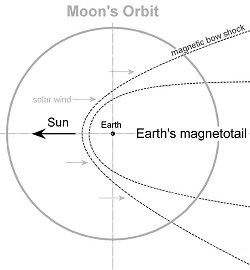
Astronomers Discover That The Earth's Magnetotail Charges The Surface Of The Moon
October 1, 2008 — Astrophysicists found that the moon's surface becomes electrified during each full moon. The moon passes through the Earth's magnetotail, a cone of highly-charged particles, for about 6 days each month. On the side of the moon facing the sun, ultraviolet particles disrupt the electromagnetic effect, keeping the voltage at low levels, but on the dark side, the voltage can reach hundreds or thousands of volts.
The last time man walked on the moon was in 1972. Now, NASA is planning to re-visit the moon by the year 2020 -- but a shocking discovery about Earth's companion may put a hold on those plans.
Our moon looks calm and rather dull, and nothing ever seems to change. Even an astronaut's footprint lasts millions of years; but now, space scientists have learned something on the moon does change -- and it's quite shocking.
"The surface of the moon can become electrified from charged particles in the surrounding space environment," says Timothy Stubbs, Ph.D., a space scientist at the NASA Goddard Space Flight Center in Greenbelt, Md.
This electric event happens once a month when the moon passes through the earth's magnetotail. A magnetotail is caused when the highly-charged particles of the solar wind zoom past the earth and mix with earth's magnetic field, creating a long tail that extends into the moon's orbit. "The moon is actually sitting in a sea of charged particles," Dr. Stubbs says.
Each month, the moon enters the magnetotail for six days. As it crosses inside the magnetotail, the moon's surface becomes highly charged. If astronauts walked across the charged surface, they might feel a static shock -- just like walking across a carpet and then touching a door knob. It's not a deadly shock, but a powerful zap! It's easy to know when the moon is passing through the earth's magnetotail -- just look for a full moon.
No astronaut has ever landed on a charged-up full moon to know exactly what happens, so learning more now will help astronauts in the future.
"These sorts of things that affect astronauts are things that we'd like to investigate before we return to the moon," Dr. Stubbs says.
When NASA returns to the moon, scientists plan to establish an outpost for long-term moon exploration -- and they plan to also explore the magnetotail.
ABOUT THE MOON: The moon is Earth's only natural satellite, a cold, dry orb whose surface is studded with craters and strewn with rocks and dust. The moon's gravitational force is only 17% of the Earth's gravity. For example, a 100 pound (45 kg) person would weigh just 17 pounds (7.6 kg) on the Moon. The temperature on the Moon ranges from daytime highs of about 265F (130C) to nighttime lows of about -170F (-110C). The moon has no atmosphere. On the moon, the sky always appears dark, even on the bright side (because there is no atmosphere). Also, since sound waves travel through air, the moon is silent; there can be no sound transmission on the moon. The phases of the moon are caused by the relative positions of the earth, sun, and moon. The moon goes around the earth, on average, in 27 days, 7 hours, and 43 minutes. The sun always illuminates the half of the moon facing the sun (except during lunar eclipses, when the moon passes through the earth's shadow). When the sun and moon are on opposite sides of the earth, the moon appears "full" to us, a bright, round disk. When the moon is between the earth and the sun, it appears dark, a "new" moon. In between, the moon's illuminated surface appears to grow (wax) to full, then decreases (wane) to the next new moon.
WHAT IS THE SOLAR WIND? Flowing outward from the Sun's extremely hot corona, the solar wind is a stream of charged particles traveling in all directions at incredibly high speeds. As these changes speed toward the Earth, they interact with other charged particles and can create phenomena such as the northern lights and geomagnetic storms -- which can damage spacecraft, including communications satellites.
Scientists Map Penguins From Space By Locating Their Feces

Map showing the location of emperor penguin colonies found in this study. (Credit: Image courtesy of British Antarctic Survey)
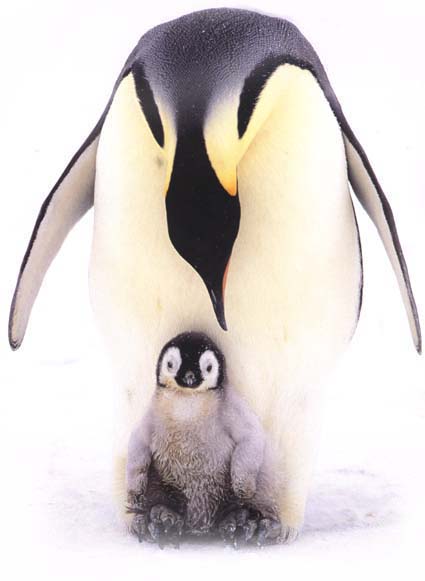
Penguin poo (guano) stains, visible from space, have helped British scientists locate emperor penguin breeding colonies in Antarctica. Knowing their location provides a baseline for monitoring their response to environmental change.
In a new study, scientists from British Antarctic Survey, (BAS) describe how they used satellite images to survey the sea-ice around 90% of Antarctica's coast to search for emperor penguin colonies. The survey identified a total of 38. Ten of those were new. Of the previously known colonies six had re-located and six were not found.
Because emperor penguins breed on sea-ice during the Antarctic winter little is known about their colonies. Reddish brown patches of guano on the ice, visible in satellite images, provide a reliable indication of their location.
BAS Mapping expert Peter Fretwell explains: "We can't see actual penguins on the satellite maps because the resolution isn't good enough. But during the breeding season the birds stay at a colony for eight months. The ice gets pretty dirty and it's the guano stains that we can see."
Emperor penguins spend a large part of their lives at sea. During the Antarctic winter when temperatures drop to -50°C they return to their colonies to breed on sea-ice, but this is a time when it is most difficult for scientists to monitor them.
BAS Penguin ecologist Dr Phil Trathan says: "This is a very exciting development. Now we know exactly where the penguins are, the next step will be to count each colony so we can get a much better picture of population size. Using satellite images combined with counts of penguin numbers puts us in a much better position to monitor future population changes over time."
This research builds on work by French scientists who extensively studied one colony and found the population was at significant risk from climate change. The six colonies not found in this study were at a similar latitude suggesting that emperor penguins may be at risk all around Antarctica.
Emperor Penguins
Previous knowledge on the number and distribution of emperor penguin colonies was poor, due to their habit of breeding on sea-ice during the Antarctic winter. These areas are infrequently visited during the Antarctic summer when researchers can access them although the penguins are away feeding at sea. Estimates of the total number of emperor penguins range between 200,000 - 400,000 pairs.
Of the 38 colonies located on the continent in this study, 10 are new, six have been re-positioned and six that were previously thought to exist were not found or have disappeared. These six colonies were originally recorded north of 70° South which helps substantiate other modeling studies and suggests that emperor penguins around Antarctica are at significant risk from climate change.
Few colonies are monitored on an annual basis. This study concentrates on the number and location of emperor penguin colonies; other techniques are necessary to provide accurate counts within these colonies. The next stage of this research will be to use high resolution satellite data to count up the penguins at each of the 38 colonies.
Recent computer modelling studies (Jenouvrier et al 2009, published in the Proceedings of the National Academy of Sciences), based on over 40 years of population data from a long term study colony of emperor penguins in Terre Adélie in the Antarctic, have predicted that populations have a high probability of declining by 95% or more in the face of climate change. These predictions are based on one colony that is located relatively far north at 66.6° South. The new methods developed in the study by Fretwell and Trathan make it possible to test these predictions at other locations where emperor penguins breed, particularly further South where the majority of emperor penguin colonies occur.
The emperor is the giant of the penguin world and one of the largest of all birds. Gold patches on their ears and on the top of their chest brighten up their black heads. Emperors are the only penguin species to breed through the Antarctic winter. The emperor penguins breed the furthest south of any penguin species, forming large colonies on the sea-ice. So that the chicks can fledge in the late spring and early summer seasons, emperors breed during the cold, dark winter, with temperatures as low at -50°C and winds of up to 200km per hour. The female lays a single egg in May then passes it over to her mate to incubate whilst she goes to sea to feed. For nine weeks the male fasts, losing up to 45% of his body weight. The male balances the egg on his feet, which are then covered by a thick roll of skin and feathers. The egg can be 70°C warmer than the outside temperature. To achieve this amazing preservation of heat, emperors have a special combination of adaptations, with a dense double layer of feathers and a large fat reserve. When the female arrives back in August, just around the time when the chicks are due to hatch, she takes over brooding and feeding the chick whilst the male treks up to 100km over the ice to find food. Afterwards, both adults rear the chick.
Stellar Explosion Displays Massive Carbon Footprint

SCP 06F6. New research by astrophysicists at the University of Warwick has discovered that a mystery stellar explosion recorded in 2006 may have marked the unusual death of an equally unusually carbon-rich star. (Credit: NASA, ESA, and K. Barbary (University of California, Berkeley))
While humans are still struggling to get rid of unwanted carbon it appears that the heavens are really rather good at it. New research by astrophysicists at the University of Warwick has discovered that a mystery stellar explosion recorded in 2006 may have marked the unusual death of an equally unusually carbon-rich star.
The strange object known as SCP 06F6 was first noted in 2006 by supernovae researchers in the US taking images with the Hubble Space Telescope, seeing it appearing out of nowhere, and fading again into oblivion, over the course of 120 days. The US team published their observations in September 2008, drawing a blank on the nature of SCP 06F6, in particular it was unclear if this event happened in our cosmic backyard, or at the other end of the universe.
Now a team of astrophysicists and astronomers at the University of Warwick in the UK believe they have come up with an answer. According to their research, the observations of SCP 06F6 bear remarkable resemblance to a group of stars containing extremely large proportions of carbon, hence dubbed carbon stars. However, to achieve the close match, SCP 06F6 must be at a distance of around 2 billion light years, causing a considerable redshift in its appearance. Given the large distance, the sudden appearance of SCP 06F6 is most likely related to the sudden death of a carbon-rich star, and the Warwick team believes that this object may be a new type of a totally new class of supernova.
It would be an unusual type of supernovae in several aspects: SCP 06F6 is located in a blank part of the sky, with no known visible host galaxy. If the star did explode as a normal type II supernova why then did it take up to four times as long to brighten and diminish as other such supernova and why did emit up to 100 times more X-rays energy than expected? The X-ray energy might lead one to speculate that the star was ripped apart by a black hole rather than exploding on its own, but the lead researcher of University of Warwick team Boris Gänsicke says that idea is not without its problems as:
“The lack of any obvious host galaxy for SCP 06F6 would imply either a very low black hole mass (if black holes do exist at the centres of dwarf irregular galaxies) or that the black hole has somehow been ejected from its host galaxy. While neither is impossible this does make the case for disruption by a black hole somewhat contrived.”
“Several new telescopes are now being designed and built that will continuously monitor the entire sky for short guest appearances of new stars, and there is no doubt that SCP 06F6 will not remain alone in puzzling astronomers over the coming years.“
Ancient Mammals Shifted Diets As Climate Changed

This fossilized horse (Equus) tooth shows where a series of enamel samples have been drilled to help identify seasonal fluctuations in the animal's diet. This horse lived about 1.9 million years ago during a glacial period in Florida. (Credit: Mary Warrick/University of Florida)
A new University of Florida study shows mammals change their dietary niches based on climate-driven environmental changes, contradicting a common assumption that species maintain their niches despite global warming.
Led by Florida Museum of Natural History vertebrate paleontologist Larisa DeSantis, researchers examined fossil teeth from mammals at two sites representing different climates in Florida: a glacial period about 1.9 million years ago and a warmer, interglacial period about 1.3 million years ago. The researchers found that interglacial warming resulted in dramatic changes to the diets of animal groups at both sites.
"When people are modeling future mammal distributions, they're assuming that the niches of mammals today are going to be the same in the future," DeSantis said. "That's a huge assumption."
Co-author Robert Feranec, curator of vertebrate paleontology at the New York State Museum, said scientists cannot predict what species will do based on their current ecology.
"The study definitively shows that climate change has an effect on ecosystems and mammals, and that the responses are much more complex than we might think," Feranec said.
The two sites in the study, both on Florida's Gulf Coast, have been excavated quite extensively, DeSantis said. During glacial periods, lower sea levels nearly doubled Florida's width, compared with interglacial periods. But because of Florida's low latitude, no ice sheets were present during the glacial period. Despite the lack of glaciers in Florida, the two sites show dramatic ecological changes occurred between the two periods.
Both sites include some of the same animal groups, allowing DeSantis, Feranec and Bruce MacFadden, Florida Museum curator of vertebrate paleontology, to clarify how mammals and their environments responded to interglacial warming.
The research examined carbon and oxygen isotopes within tooth enamel to understand the diets of medium to large mammals, including pronghorn, deer, llamas, peccaries, tapirs, horses, mastodons, mammoths and gomphotheres, a group of extinct elephant-like animals.
Differences in how plants photosynthesize give them distinct carbon isotope ratios. For example, trees and shrubs process carbon dioxide differently than warm-season grasses, resulting in different carbon isotope ratios. These differences are incorporated in mammalian tooth enamel, allowing scientists to determine the diets of fossil mammals. Lower ratio values suggest a browsing diet (trees and shrubs) while a higher ratio suggests a grazing diet (grasses).
Animals at the glacial site were predominantly browsing on trees and shrubs, while some of those same animals at the warmer interglacial site became mixed feeders that also grazed on grasses. Increased consumption of grasses by mixed feeders and elephant-like mammals indicates Florida's grasslands likely expanded during interglacial periods.
Tooth enamel locks in the chemical signatures of the plants and water an animal consumes, allowing paleontologists to understand the diets and associated climate of fossil specimens that are millions of years old. To find these signatures, researchers run samples of tooth enamel through a mass spectrometer.
DeSantis and her collaborators analyzed enamel samples from 115 fossil teeth. For two of the specimens she took serial samples, small samples that run perpendicular to the growth axis and give insight into how the diet and climate changed over a specific period of time.
"That's one of the cool things about using mammal teeth," she said. "We can actually look at how variable the climate was within a year, millions of years ago."
The study highlights the importance of the fossil record in understanding long-term ecological responses to changes over time, DeSantis said. While ecological studies of modern impacts can cover only limited spans of time, "this study emphasizes the importance of using the fossil record to look at how mammals and other animals responded to climate change in the past, also helping us gain a better understanding of how they might respond in the future."
Air France Crash Site in Breeding Zone for Storms?

With South America at center, a satellite image captures cloud patterns in the Western Hemisphere on the evening of May 31, 2009.
That same day Air France Flight 447 disappeared, probably off the easternmost coast of South America. The likely crash site is within the intertropical convergence zone, a belt of cloudy, rapidly changing weather that circles the globe near the Equator.
Searchers scouring the Atlantic Ocean for evidence of an Air France crash have spotted debris off northern Brazil's coast (map) possibly belonging to the doomed Flight 447.
The cause of Air France Flight 447's disappearance on Sunday is still unknown, but experts speculate the plane may have encountered turbulence and thunderstorms as it flew from Rio de Janeiro to Paris.
The plane's flight path took it through a tough-to-navigate breeding zone for thunderstorms near the Equator known as the intertropical convergence zone, or ITCZ.
Air France Crash Caused by Tall, Dynamic Storm Clouds?
Northern and southern trade winds crash into each other in the globe-encircling ITCZ. By pushing warm, buoyant equatorial air upward, the convergence helps fuel the zone's almost unceasing series of thousands of small storms.
"You have one thunderstorm building and another dying. It's a constant evolution of things happening," said Larry Cornman, an atmospheric scientist at the National Center for Atmospheric Research in Colorado.
Modern jets typically outmaneuver storms, often flying above thunderclouds.
But the storm clouds in the ITCZ can merge to create towering thunderclouds whose upper reaches are higher than most commercial planes fly.
And because the storm clouds cover an area of hundreds of square miles, it's often not practical for pilots to fly around the storms.
"So what they do is typically try to weave their way through without getting into a thunderstorm," Cornman said.
High Tech Little Help to Air France Flight 447?
Making matters worse, radar is of limited use in the ITCZ.
Air turbulence and strong winds often don't show up strongly, even in areas of pervasive radar coverage, and the ITCZ is not one of those areas.
"You don't have radar [towers] out there on the ground, and there aren't enough aircraft flying through there to get meteorological reports," Cornman said.
Another potential tool, satellite imagery, doesn't have sharp enough resolution or quick enough updates for pilots to make snap decisions, he added.
In such situations, pilots often rely on one another for real-time weather reports, explained Thomas Anthony, director of the Aviation Safety and Security Program at the University of Southern California.
"Pilot reports, or 'pireps,' tells other pilots what's going on. That's where you get your reports about whether turbulence is moderate, light, or severe," Anthony said.
But the ITCZ limits the value of pireps as well, Cornman said.
"The thunderstorms are very dynamic. Even if someone flew through there ten minutes earlier, if you fly even 20 miles [30 kilometers] to the side of where they were, the conditions could be totally different," he said.
While the ITZC can be treacherous for pilots, thunderstorms alone were probably not enough to cause Air France Flight 447 to crash, experts say.
"Almost never is an aircraft accident due to a single failure," Anthony said.
"The thunderstorm may have presented the most immediate cause, but we will find there were contributing factors that led up to it and allowed this to occur."
Particles Larger Than Galaxies Fill the Universe?

Every day billions of subatomic particles called neutrinos are streaming at Earth from the sun. But these particles have no charge, very tiny masses, and move near the speed of light, making them especially hard to detect (above, a diver services a tank of water in Michigan used to detect neutrinos).
In May 2009 astronomers trying to measure neutrino masses found that the oldest known neutrinos might have been stretched by the expansion of the universe so that each particle encompasses a space larger than thousands of galaxies.
The oldest of the subatomic particles called neutrinos might each encompass a space larger than thousands of galaxies, new simulations suggest.
Neutrinos as we know them today are created by nuclear reactions or radioactive decay.
According to quantum mechanics, the "size" of a particle such as a neutrino is defined by a fuzzy range of possible locations. We can only detect these particles when they interact with something such as an atom, which collapses that range into a single point in space and time.
For neutrinos created recently, the ranges they can exist in are very, very small.
But over the roughly 13.7-billion-year lifetime of the cosmos, "relic" neutrinos have been stretched out by the expansion of the universe, enlarging the range in which each neutrino can exist.
"We're talking maybe up to roughly ten billion light-years" for each neutrino, said study co-author George Fuller of the University of California, San Diego.
"That's nearly on the order of the size of the observable universe."
"Small" Physics, Writ Large
Neutrinos have no charge, and their masses are so tiny they have yet to be accurately measured.
This means that neutrinos, which zip around at nearly the speed of light, can pass through normal matter largely undisturbed.
Most neutrinos that affect Earth come from the sun. Billions of solar neutrinos pass through the average human every second.
While trying to calculate masses for neutrinos, Fuller and his student Chad Kishimoto found that, as the universe has expanded, the fabric of space-time has been tugging at ancient neutrinos, stretching the particles' ranges over vast distances.
Such large ranges can remain intact, the scientists suggest in the May 22 issue of Physical Review Letters, since neutrinos pass right through most of the universe's matter.
An open question is whether gravity—say, the pull from an entire galaxy—can force a meganeutrino to collapse down to a single location.
"Quantum mechanics was intended to describe the universe on the smallest of scales, and now here we're talking about how it works on the largest scales in the universe," Kishimoto said.
"We're talking about physics that hasn't been explored before."
According to physicist Adrian Lee at the University of California, Berkeley, who was not part of the study team, "gravity is a real frontier these days that we don't really understand.
"These neutrinos could be a path to something deeper in our understanding with gravity."
Follow the Gravity?
But answers to such questions depend on eventually detecting these predicted meganeutrinos.
Although they should be extraordinarily common in the universe, the relic neutrinos now have only about one ten-billionth of the energy of neutrinos generated by the sun.
"This makes relic neutrinos near impossible to detect directly, at least with anything one could build on Earth," study co-author Fuller said.
Still, the fact that there are so many relic neutrinos means that together they likely exert a significant gravitational pull—"enough to be important for how the universe as a whole behaves," Fuller added.
Dark matter, for example, has never been directly observed. But astrophysicists have found proof that dark matter exists based on its effect on colliding galaxies.
"So by looking at the growth of structures in the universe," Fuller said, "you might be able to detect relic neutrinos indirectly by their gravity."
Supermassive black hole

In an active galaxy, two opposing jets of particles shoot out near the speed of light from the supermassive black hole at the galaxy's center, as seen in an artist's conception.
Using the recently launched Fermi Gamma-ray Space Telescope, astronomers have found a new type of active galaxy and have detected changes in the energy output of another galaxy--findings that will improve understanding of the various sources of high-energy gamma rays in our universe.
Suscribirse a:
Entradas (Atom)