Crocs Uncover

Bizarre Species

lunes, 30 de marzo de 2009

Coin-Size Frog Found -- One of World's Smallest


As the smallest known frog species in the world's second largest mountain range, this new amphibian is easy to miss.

But scientists searching the Andes mountains' upper Cosnipata Valley in southern Peru, near Cusco, spotted the coin-size creature--a member of the Noblella genus--in the leaf litter of a cloud forest between 9,925 and 10,466 feet (3,025 and 3,190 meters).

"The most distinctive character of the new species," scientists write in the February issue of the journal Copeia, "is its diminutive size." Females grow to 0.49 inch (12.4 millimeters) at most. Males make it to only 0.44 inch (11.1 millimeters).

What's most surprising is that the frog lives at such high elevations, said study co-author Alessandro Catenazzi, a postdoctoral researcher at the University of California, Berkeley. In general, larger animals are found at greater heights.

Nanocrystals Show How Bones Grow


How tiny atoms group together and solidify into bone, the tough but lightweight tissue that makes up our skeletons and protects our vital organs, has long eluded scientists.

Now the world's most advanced electron microscope has revealed that the formation of biominerals, like bone and teeth shells, begins with a small cluster of about ten ions, or charged particles smaller than a nanometer (a billionth of a meter).

Researchers prepared a solution of inorganic calcium carbonate in the lab, these clusters assembled in solution to form disorganized groups of ions about 30 nanometers wide formed.

When this random ensemble rose to an organic "surface" provided by the scientists, the clusters began to crystallize and grow into minerals.

Eventually one big crystal about a hundred nanometers wide emerged (pictured, a false-color image of the cluster at several micrometers wide).

"The finding is, it's not ions, but these clusters, that makes a difference in how organic and inorganic materials interact," said study lead author Nico Sommerdijk of the Eindhoven University of Technology in the Netherlands.

The experiment simulated the creation of a shell rather than a human bone, which is made of calcium phosphate, not carbonate. But Sommerdijk said both processes should work "roughly the same way."

Understanding bone genesis can help scientists mimic the "beautiful strategies that nature uses to make strong and precise materials," said Sommerdijk, whose study appeared in a recent issue of the journal Science.

For instance, synthetic, bonelike materials grown in a lab could be used for bone replacements in people. Construction materials, such as heavy concrete, could also be made from bone-inspired products.

"If we could make something that would be a third of the weight but the same properties mechanically, that would be a really big advancement," Sommerdijk said.

Huge Man-Made Algae Swarm Devoured--Bad for Climate?


A short time after scientists pumped iron-enhanced water into oceans off Argentina, tiny shrimplike crustaceans called copepods (pictured) wolfed down the resulting algae bloom—and a potential weapon against global warming quickly disappeared.But some iron-fertilization advocates point out there is still not enough evidence to argue for or against the strategy.

A giant experiment went awry at sea this month.


Shrimplike animals devoured 159 square miles (300 square kilometers) of artificially stimulated algae meant to fight global warming—casting serious doubt on ocean fertilization as a climate-control tool.

For years, scientists have proposed supercharging algae growth by dumping tons of iron into the ocean.
Working aboard the German research vessel Polarstern, German and Indian scientists in recent weeks mixed ten tons of ferrous sulfate with seawater. The team then pumped the artificially enhanced water back into the Atlantic outside Argentina's coastal waters.

As expected, the experiment created a massive, CO2-eating algae bloom.

But it was the wrong algae.

The blooms were mostly tiny haptophytes, not the larger diatom algae the team had expected.

The smaller algae variety is typically found only in coastal waters, and it's a favorite food of tiny shrimplike crustaceans called copepods.

The copepods wolfed down the algae shortly after the new South Atlantic bloom appeared—and a potential weapon against global warming quickly disappeared.

"The fact that they are rapidly eaten by marine animals is not good for carbon sequestration," said Ulrich Bathmann, head of bioscience at the Alfred Wegener Polar and Oceanography Institute (AWI) in Bremerhaven, Germany, who was involved in the experiment.

Good News? Bad News?

Experts not part of the new experiment are divided on what the results mean.

"The new finding here is that the standard calculations of 'the number of tons of iron in equals the number of tons of carbon out' probably don't actually work," said Gabriel M. Filippelli, an earth sciences professor at Indiana University-Purdue University Indianapolis.

"This calls into question the efficacy of iron fertilization as a solution to global warming."

Iron-fertilization supporters, though, remain hopeful.

"These results neither argue for nor against iron fertilization as a carbon-sequestration strategy," said Kenneth Coale, director of California-based Moss Landing Marine Laboratories.

Moss Landing scientists created a similar, though smaller, algae bloom in Antarctic waters in 2002.

On the bright side, Coale said, the experiment adds to evidence that iron can stimulate large-scale algae growth. It's not clear that in every instance animals would gobble up the carbon-sucking plants, he says.

Other experiments have also had better success at sequestering carbon, Coale added.

And regardless of its carbon-sequestration success or failure, Coale said, at least the South Atlantic experiment did not damage the local ocean environment—which would have been a more serious black mark on iron fertilization.

The consensus, though, seems to fall somewhere on the fence, said environmental scientist Andrew Watson of the University of East Anglia, U.K.

The recent experiment, Watson said via email, "shows that we still haven't learned by any means all there is to know about the effects of iron on marine ecosystems and the carbon balance in the oceans."
Iron is a necessary element for algae photosynthesis—the process by which the plants convert sunlight into energy—but it is relatively rare in the ocean.

Algae suck carbon dioxide (CO2), a greenhouse gas that contributes to global warming, out of the atmosphere. The algae then generally fall to the seafloor—sequestering the CO2 indefinitely.

About a dozen such "iron fertilization" experiments have already been done—with mixed success.

But experts have warned of unintended consequences, such as unpredictable reactions in the ecosystem.

And that's just what happened during a recent, large-scale iron dump in the South Atlantic, the Alfred Wegener Institute in Germany announced this week.

Surprising Blooms

With the greenish, crystalline look of a pulverized windshield, ferrous sulfate is commonly given to iron-deficient humans.

It's also the iron of choice for boosting algae growth.

viernes, 27 de marzo de 2009

Cheap Gas From Coal


Electric cars have been getting a lot of buzz lately, but a more immediately viable transportation fuel of the future could be liquid derived from coal. Scientists have devised a new way to transform coal into gas for your car using far less energy than the current process. The advance makes scaling up the environmentally unfriendly fuel more economical than greener alternatives.

If oil prices rise again, adoption of the new coal-to-liquid technology, reported this week in Science, could undercut adoption of electric vehicles or next-generation biofuels. And that's bad news for the fight against climate change.

The new process could cut the energy cost of producing the fuel by 20 percent just by rejiggering the intermediate chemical steps, said co-author Ben Glasser of the University of the Witwatersrand in Johannesburg, South Africa. But coal-derived fuel could produce as much as twice as much CO2 as traditional petroleum fuels and at best will emit at least as much of the greenhouse gas.

"The bottom line is that there's one fatal flaw in their proposed process from a climate protection standpoint," Pushker Karecha of NASA's Goddard Institute for Space Studies wrote in an e-mail to Wired.com. "It would allow liquid fuel CO2 emissions to continue increasing indefinitely."

The race for alternative fuels kicked into high gear last year, with the price of oil reaching $150 a barrel before plummeting down below $40 this year. Still, though experts disagree on the specifics of timing, it's clear that conventional oil sources will eventually run out. The list of contenders to replace oil is long and diverse. Alternative fuels could include next-gen ethanol, algal biofuel, hydrogen and natural gas, or cars could go largely electric.

But the problem with all the new fuels is that they have to scale up — and that's harder than it sounds. Plus, many fear that biofuels could cause massive, negative land-use changes.

The process of cooking coal into liquid fuel, on the other hand, has already proven itself on a massive scale. Take coal, add some water, cook it, and you've got a liquid fuel for your car. The hydrogen in the water bonds to the carbon and voila: hydrocarbons, such as octane. It's the very fact that coal-to-liquids could work that make them such a scary idea for people devoted to fighting climate change.

UUSOS update at Catalina Island


Nancy Bradley: The ocean was strange that day, beginning about 12 miles out to sea, unaccountable ripples with no consistency and large patches of water so smooth you would think you were in a bathtub. And then the large waves of undetermined origin would appear seemingly out of nowhere, some starting from beside the boat and some as far in the distance as two miles. They caved and cavorted. And then everything was smooth again.

I am a seasoned traveler to Catalina Island and this was clearly strange behavior for the sea. Very strange indeed. Word was out once again in the media this February day in 2009, reported strange UFOs in the ocean around Catalina Island, something that crops up every now and then. The rumors had been flying for years. Of course I had heard them, even been on productive investigations in New York, New Jersey and the everglades for just such phenomena. But I had never experienced the phenomena spoken about between Dana Point or Long Beach, (the mainland where most folks board a ferry or boat to the island), and Catalina, 26 miles out to sea.

Everyone has heard of UFOs, but sadly there is not as much coverage or information out there that addresses the fact that the sea holds secrets considered UNIDENTIFIED UNDERWATER SUBMERSIBLE OBJECTS. Thoughts of this phenomena go to two camps ~ one is that the U.S. government has strange experimental aircraft that goes effortless into the sea, and the other is that UFOS from other planets, strange and unknown yet so much more advanced than our own technology, not only invade our air space but our sea as well. Some research suggests that many airborne UFO aircraft, when detected, make a quick retreat into the ocean. There are of course a number of other theories and scenarios, but these are the most common. And they appear to be most prevalent in the U.S. along the shores of New York and New Jersey and in Southern California. One such place that has gotten our attention for such activity since the early 1960s is Catalina Island. As a seasoned paranormal investigator with GOLD RUSH GHOSTS and host of the television show INVESTIGATING THE UNKNOWN WITH GOLD RUSH GHOSTS PARANORMAL INVESTIGATIONS my cackles go up with such stories, and now heightened with these strange happenings at sea.

Each year our family makes at least 3 trips to the island, one for personal family pleasure and relaxation. Another is to take along paranormal and psychic students to teach, acquaint, and have them experience island spirits, and once a year so that my husband, brother and son can dive with the Catalina Conservancy to clean up the bay around the island. Our goal is to keep the ocean there pristine. It remains effortless water, clean and beautiful as far as the eye can see. And it was on just such a trip this February that we encountered what can only be described as UUSO activity.

Catalina Island (Avalon), one of California seven Channel Islands, is (as the song goes) 26 miles across the sea from the Southern California mainland. You can embark from several locations, we prefer the ferry ride from Dana Point even though it is a bit longer than the 26 miles from other stations because our organization is offered the Captains Cabin lounge on the ferry. It is here we can enjoy the ride in our own little space, a closed in room close to the captain. Catalina is little changed since William Wrigley Jr. of the chewing gum fame bought the island in 1919. The few changes are monitored well by the Catalina Conservancy, and it remains small and unchanged, laid back and friendly. Catalina is considered a geographic anomaly unlike the other Channel Islands however, which broke away from the mainland, which may account for the many USSO sightings. Geologists tell us Catalina Island was formed by the upward heave of tectonic plates. Catalina is primarily composed of two rock units, the Catalina Schist from the Cretaceous and volcanic rocks from the tertiary period. Could this be why it is felt that there is more USSO activity around Catalina than the other Channel Islands? The most inhabited side of Catalina Island is Avalon, around the corner Two Harbors is the smaller of the islands population centers. We are headed for Avalon. Of course for history buffs there is plenty at Catalina. It was once occupied by Indian tribes, and there are stories of Indian massacres in at least 2 of the Channel Islands. Around Catalina there is reported history way back when, of pirates and there are several sunken ships off her shores. Many movie stars and celebrities have been known to visit the island, Ronald Reagan, Frank Sinatra among many. Marilyn Monroe lived on the island for a stretch when married to her first husband in the 1940s a military man. And of course, who could forget that Natalie Wood drown just off the Catalina shore while vacationing on her husband Robert Wagners yacht in 1981. And then there is the true story of Lisa Marie Presley being angry with her then fiance Nicolas Cage and throwing her $500,000 diamond engagement ring overboard. No one has ever admitted to finding it.

Halfway out to sea on this trip, after reuniting with the crew and passengers and enjoying a mimosa or two, the steward brought something to our attention. There he said, Starboard. Look at those dolphins. We see them from time to time and there sure are a lot of them out there today! He quickly went in to talk to the captain, leaving us to observe from our vantage point, the best on the boat. We looked out the window and fumbling for our cameras, wanting to take as many pictures and video shots as we could. Strange for this water indeed, dolphins as far as the eye could see, in groups of hundreds, jumping out of the water, seemingly trying to get away from something. We wondered if it could be difficult navigating the ferry to get out of their way, wondering if there would be impact. And then they were gone. Certainly we had seen dolphins in this water, even a whale or two, but never in these numbers, and never interplaying with such strange and frantic activity. A few miles closer to our destination we again experienced the same dolphin activity, large numbers, moving fast, jumping over the water and diving hard. We made notes as well of this phenomena, clearly something not experienced before. And then the highlight of our trip occurred. A large object, white, almost not detectable from the clouds in the sky, hovered. We watched as it swayed from side to side, and after about a half minute, it made a beeline disappearing into the sea. I was lucky to get a quick shot of it. Greatly encouraged, I stayed at my perch, camera in hand, while the rest of our crew left the confines of our Captains Cabin to go the other side of the boat and make conversation with the locals coming back to their island from the mainland, many, seasoned islanders, preferring seats that allowed them the wind in their faces. Our crew inquired of stories about UUSOs and strange dolphin activity which they told us generally precedes a sighting. In fact, just this week it had been reported that people had sighted yet more UUSO going into the water just about where we were on our seaward journey.

Back in the Captains Cabin we could see the Island coming up on us now. The water smoothed. Folks from the island told us that national television newscasters had been there asking questions. Interesting indeed.

We docked and thanked our captain and crew as always, grabbed our luggage and gear and made our way to our favorite hotel. It is beautiful, the water just a few steps from our door. After settling in, we walked to the local restaurant for a bite and to discuss what we had seen. Several of the locals who overheard our conversation asked to join us at our table anxious to relate their own stories. Late at night we see lights going into the bay about a mile out one gentleman told us, others shaking their heads in agreement. The waitress chimed in, One night there was a naval ship just off shore patrolling. This is not uncommon. But what I saw that was strange was what went on behind them. Large scale triangle objects, three of them, crafts, floating above the ship. And then, after circling, they made a quick retreat into the sea. I noticed several small boats showing up shortly after this event with lights around it making circles in the area, looking for what had happened. It is all so strange. A man who has lived most of his life on the island told us Generally they are white those crafts, he said. And when they hit the water they turn a light blue. I know because they are florescent and you can see them for a short time going down into the water. It was suggested that the most USSO sightings are on this side of the island, Avalon. GOOD!

We intended to do our own diving for UUSO information, but the next day was hectic, there were upward of 500 divers all getting ready to go into the water with the Catalina Conservancy with the mission to clean up the bay. Too many people around to make paranormal progress, it would have to wait until tonight or tomorrow. We temporarily put USSO thoughts away.

I dont dive. I have no desire to have fish touching my body or to see an eel or octopus. I have a lot of energy and I am considered fearless. I have met many a challenge head strong and winning, but diving among the deep is not ever going to be one of my strong suits. So on this day I took my lookout from the second story of the hotels outdoor balcony. The sun was just right and my thought was to curl up on one of the lounges with a book. But the dedicated divers, though I had seen them before, caught my attention and I watched as they all went into the water, two at a time. The buddy system is the safe system when diving. And as I watched them, my eyes were drawn further out into the bay, behind the boats moored in the open ocean. Something was amiss again. Strange ocean patterns appeared. There were circular motions in the sea just about where the islanders had told me they saw activity. It went on for quite a time, and then died down as the divers came forward with their bounty of garbage the uncaring left behind, an old motor, plastic bottles and other refuge. One man found a wallet with $200 in it. Luckily the owners name was still visible on a credit card and he would be notified of the find. The heart goes out to those that care about cleaning up our planet. We all benefit. After the clean-up I asked around if any of the divers saw or felt anything strange. One man stated he kept loosing sight of where he was to dive. He said he continuously got off course, something that had not happened to him before. Several divers remarked that their navigation equipment was somehow off, their compasses were acting strangely.

And so as day went into night and all the activities died down, we got dressed to go to dinner, and afterward walked the strip near the water, taking in the sights. Nope, nothing of consequence happened in or around the water that night on our watch. DRAT!

The ride back to the mainland was uneventful. We are energized that we have at last the proof of much activity in the water between the mainland and Catalina from this trip. We will be coming back in May with a larger paranormal crew, more experts and better equipment. Will keep you posted. For now we know one thing. There ARE USSOS around Catalina Island. What they are all about we are determined to find out.

For more information go to: http://www.goldrushghosts.com and http://www.nancybradley.org

Earliest Evidence Of Domesticated Maize Discovered: Dates Back 8,700 Years


Balsas teosinte, a large wild grass that grows in the Central Balsas River Valley of Mexico. Maize domesticated from Balsas teosinte more than 8,700 years ago. (Credit: Anthony Ranere/Temple University)

Maize was domesticated from its wild ancestor more than 8700 years according to biological evidence uncovered by researchers in the Mexico's Central Balsas River Valley. This is the earliest dated evidence -- by 1200 years -- for the presence and use of domesticated maize.

According to Ranere, recent studies have confirmed that maize derived from teosinte, a large wild grass that has five species growing in Mexico, Guatemala and Nicaragua. The teosinte species that is closest to maize is Balsas teosinte, which is native to Mexico's Central Balsas River Valley.

"We went to the area where the closest relative to maize grows, looked for the earliest maize and found it," said Ranere. "That wasn't surprising since molecular biologists had determined that Balsas teosinte was the ancestral species to maize. So it made sense that this was where we would find the earliest domestication of maize."

The study began with Piperno, a Temple University anthropology alumna, finding evidence in the form of pollen and charcoal in lake sediments that forests were being cut down and burned in the Central Balsas River Valley to create agricultural plots by 7000 years ago. She also found maize and squash phytoliths -- rigid microscopic bodies found in many plants -- in lakeside sediments.

Ranere, an archaeologist, joined in the study to find rock shelters or caves where people lived in that region thousands of years ago. His team carried out excavations in four of the 15 caves and rock shelters visited in the region, but only one of them yielded evidence for the early domestication of maize and squash.

Ranere excavated the site and recovered numerous grinding tools. Radiocarbon dating showed that the tools dated back at least 8700 years. Although grinding tools were found beneath the 8700 year level, the researchers were not able to obtain a radiocarbon date for the earliest deposits. Previously, the earliest evidence for the cultivation of maize came from Ranere and Piperno's earlier research in Panama where maize starch and phytoliths dated back 7600 years.

Ranere said that maize starch, which is different from teosinte starch, was found in crevices of many of the tools that were unearthed.

"We found maize starch in almost every tool that we analyzed, all the way down to the bottom of our site excavations," Ranere said. "We also found phytoliths that comes from maize or corn cobs, and since teosinte doesn't have cobs, we knew we had something that had changed from its wild form."

Ranere said that their findings also supported the premise that maize was domesticated in a lowland seasonal forest context, as opposed to being domesticated in the arid highlands as many researchers had once believed.

"For a long time, I though it strange that researchers argued about the location and age of maize domestication yet never looked in the Central Balsas River Valley, the homeland for the wild ancestor," said Ranere. "Dolores was the first one to do it.'

In addition to Ranere and Piperno, other researchers in the study included Irene Holst of the Smithsonian Tropical Research Institute, Ruth Dickau of Temple, and Jose Iriarte of the University of Exeter. The study was funded by the National Science Foundation, National Geographic Society, Wenner-Gren Foundation, Smithsonian National Museum of Natural History, Smithsonian Tropical Research Institute and the Temple University College of Liberal Arts.

Why Animals Migrate: New Understandings


Schematic showing general setup of the imaging system used to study fish shoals. (Credit: Makris Lab, MIT; Ratilal Lab, NU)

For the first time, MIT engineers and colleagues have observed the initiation of a mass gathering and subsequent migration of hundreds of millions of animals — in this case, fish.
The work, conducted using a novel imaging technique, "provides information essential to the conservation of marine ecosystems that vast oceanic fish shoals inhabit," the team writes in the March 27 issue of Science.

It also confirms theories about the behavior of large groups of animals in general, from bird flocks to locust swarms. Until now those theories had only been predicted through theoretical investigations, computer simulations and laboratory experiments.

For example, the team found that once a group of fish reaches a critical population density, it triggers a kind of chain reaction resulting in the synchronized movement of millions of individuals over a large area. The phenomenon is akin to a human "wave" moving around a sports stadium.

"As far as we know, this is the first time we've quantified this behavior in nature and over such a huge ecosystem," said Nicholas C. Makris '83, PhD '91, leader of the work and a professor of mechanical and ocean engineering. The resulting shoals of migrating fish can extend some 40 kilometers or approximately 25 miles across the ocean.

Makris' principal collaborators on the work include Purnima Ratilal PhD '02, a professor at Northeastern University, J. Michael Jech of the Northeast Fisheries Science Center, and Olav Rune Godoe of the Institute of Marine Research in Norway. Other collaborators are from MIT, Northeastern and the Southeast Fisheries Science Center.

Off Georges Bank


The researchers focused on Atlantic herring off Georges Bank near Boston during the fall spawning season. They found that the formation and movement of large shoals of the fish constituted a kind of daily evening commute to the shallower waters of the bank where they spawn under cover of darkness. Come morning, the fish head back to deeper water and disband.

The work was conducted using Ocean Acoustic Waveguide Remote Sensing (OAWRS). In 2006, Makris and colleagues published a paper in Science introducing OAWRS, which they invented, and initial observations made with it.

OAWRS allows the team to take images of an area some 100 kilometers (approximately 62 miles) in diameter every 75 seconds. This is a vast improvement over conventional techniques such as fish-finding echo-sounders, which Makris compares to "watching one pixel on a movie screen" while the new technology allows you to "see the entire movie."

Both OAWRS and conventional methods rely on acoustics to locate objects by bouncing sound waves off of them. With conventional techniques, survey vessels send high-frequency sound beams into the ocean. In contrast, the new system uses much lower frequency sound that can travel much greater distances and still return useful information with signals far less intense.

Toward conservation

Makris sees potential in using OAWRS to better monitor — and conserve — fish populations. Large oceanic fish shoals provide vital links in the ocean and human food chain, he explained, but their sheer size makes it difficult to collect information using conventional methods.

Ron O'Dor, co-senior scientist of the Census of Marine Life (CoML), commented that "OAWRS allows us to gather information such as geographical distributions, abundance and behavior of fish shoals and to better understand what constitutes healthy fish populations ... which can be implemented by policymakers to better monitor and improve conservation of fish stocks."

CoML is an international scientific collaboration engaged in a 10-year initiative to assess and explain the diversity, distribution and abundance of marine life in the oceans. It aims to release the first Census of Marine Life in 2010.

Could OAWRS be exploited to find and take more fish, rather than conserve them? Makris believes that it would be virtually impossible. For example, he said, it cannot be used in stealth. "Thieves do not like to work in broad daylight or with the lights on, and OAWRS [essentially] turns the lights on in the ocean making it possible for everyone to see what is happening there and do something about it." He also emphasized that permission from each government would be needed to use it in any nation's territorial waters or in internationally regulated waters.

The work was sponsored by the National Oceanographic Partnership Program, the Office of Naval Research, and the Alfred P. Sloan Foundation, and is a contribution to the Census of Marine Life.

Hair Structures Of Blind Cavefish Inspire New Generation Of Sensors


This optical micrograph of a blind cave fish's body shows a row of stained cupula. The fish use these gel-covered hairs to detect obstacles, avoid predators and localize prey. (Credit: Image courtesy of Michael McConney)

A blind fish that has evolved a unique technique for sensing motion may inspire a new generation of sensors that perform better than current active sonar.
Although members of the fish species Astyanax fasciatus cannot see, they sense their environment and the movement of water around them with gel-covered hairs that extend from their bodies. Their ability to detect underwater objects and navigate through their lightless environment inspired a group of researchers to mimic the hairs of these blind cavefish in the laboratory.

While the fish use these hairs to detect obstacles, avoid predators and localize prey, researchers believe the engineered sensors they are developing could have a variety of underwater applications, such as port security, surveillance, early tsunami detection, autonomous oil rig inspection, autonomous underwater vehicle navigation, and marine research.

"These hair cells are like well-engineered mechanical sensors, similar to those that we use for balance and hearing in the human ear, where the deflection of the jelly-encapsulated hair cell measures important flow information," said Vladimir Tsukruk, a professor in the Georgia Tech School of Materials Science and Engineering. "The hairs are better than active sonar, which requires a lot of space, sends out strong acoustic signals that can have a detrimental effect on the environment, and is inappropriate for stealth applications."

In a presentation on March 20 at the American Physical Society meeting, researchers from Georgia Tech described their engineered motion detector that mimics the underwater flow measurements made by the blind cavefish. This research was sponsored by the Defense Advanced Research Projects Agency (DARPA).

Tsukruk and graduate students Michael McConney and Kyle Anderson conducted preliminary experiments with a simple artificial hair cell microsensor made of SU-8, a common epoxy-based polymer capable of solidifying, and built with conventional CMOS microfabrication technology. They found that the cell by itself could not achieve the high sensitivity or long-range detection of hydrodynamic disturbances created by moving or stationary bodies in a flow field. The hair cell needed the gel-like capsule – called the cupula – to overcome these challenges.

"After covering the hair cell with synthetic cupula, our bio-inspired microsensor had the ability to detect flow better than the blind fish. The fish can detect flow slower than 100 micrometers per second, but our system demonstrated flow detection of several micrometers per second," said Tsukruk, who also holds an appointment in Georgia Tech's School of Polymer, Textile and Fiber Engineering. "Adding the cupula allowed us to detect a much smaller amount of flow and expand the dynamic range because it suppressed the background noise."

In addition, the hydrogel encapsulation protects the sensors and increases their ability to withstand deformation due to impact. It also helps the hairs better withstand the marine environment by resisting corrosion and microorganism growth.

Before the research team began synthesizing the gel-like material in the laboratory, they used optical microscopy and confocal fluorescence microscopy to determine the size, shape and properties of real cavefish cupula. One type of cupula they found was cylindrical-shaped, with a height approximately five times larger than its diameter. The tallest part of the cupula was far enough away from the surface that it was exposed to free-flowing water and could bend with the hair to detect changes in flow.

To create the synthetic cupula in the laboratory, McConney dropped a solution of poly(ethylene glycol) tetraacrylate dissolved in methanol directly on the hair flow sensor. Once the droplet dried, he lowered another droplet until it made contact with the last drop and continued adding droplets until he constructed a tall hydrogel structure. Once the entire cupula structure dried, McConney exposed it to ultraviolet light to crosslink it, forming a three-dimensional network.

"This method of adding one droplet at a time allowed us to control the width and height of the cupula and the distance from the bottom of the cupula to the base of the hair," said McConney.

While the researchers found that placing the synthetic cupula closest to the sensor platform enhanced the durability and lifetime of the capsule, they captured the best flow measurements when the cupula structure started halfway up the hair and extended past the hair by 50 percent.

They achieved the best flow results with fabricated hairs that were 550 millimeters long with dried cupula that started 275 millimeters above the base of the hair and extended 275 millimeters above the hair, giving the total hair-cupula structure a height of 825 millimeters.

To date, the researchers have fabricated an array of eight microsensors and shown that the array is able to detect an oscillating object underwater. They are currently looking for industrial partners to efficiently scale-up the research by fabricating arrays of thousands of these sensors and testing them in real marine environments.

Cheryl Coombs from Bowling Green State University and Chang Liu from the University of Illinois also contributed to this research.

Why Certain Fishes Went Extinct 65 Million Years Ago


Fossil herrings from the Eocene Green River Formation of the western United States where Colorado, Utah and Nevada meet. Herrings are one of the small-bodied groups of bony fishes that survived the end-Cretaceous extinction and persist to this day in marine environments. (Credit: Photo by Matt Friedman)

Large size and a fast bite spelled doom for bony fishes during the last mass extinction 65 million years ago, according to a new study.*
Today, those same features characterize large predatory bony fishes, such as tuna and billfishes, that are currently in decline and at risk of extinction themselves, said Matt Friedman, author of the study and a graduate student in evolutionary biology at the University of Chicago.

"The same thing is happening today to ecologically similar fishes," he said. "The hardest hit species are consistently big predators."

Studies of modern fishes demonstrate that large body size is linked to large prey size and low rates of population growth, while fast-closing jaws appear to be adaptations for capturing agile, evasive prey—in other words, other fishes. The fossil record provides some remarkable evidence supporting these estimates of function: fossil fishes with preserved stomach contents that record their last meals.

When an asteroid struck the earth at the end of the Cretaceous about 65 million years ago, the resultant impact clouded the earth in soot and smoke. This blocked photosynthesis on land and in the sea, undermined food chains at a rudimentary level, and led to the extinction of thousands of species of flora and fauna, including dinosaurs.

Scientists had speculated that during that interval large predatory fishes might have been more likely than other fishes to go extinct because they tended to have slowly increasing populations, live more spread out, take longer to mature, and occupy precarious positions at the tops of food chains. Today, ecologically similar fishes appear to be the least able to rebound from declining numbers due to overfishing.

To build the database he needed to test this prediction, Friedman traveled around the world measuring the body size and jaw bones of 249 genera of fossil fishes that lived during the late Cretaceous. These kinds of direct measurements are possible in fossil fishes because many are represented by complete, articulated individuals. This is unlike the fossil record of most other vertebrates, where bones, teeth and other parts of the skeleton are often scattered and found in isolation.

This study is the first to test this theory with hard data and to quantify the relationship between body size, jaw function and vulnerability of fishes during the Cretaceous extinction, according to Friedman.

"Anyway you sliced it, the data showed that if you were a big fish with a fast bite you were toast," he said.

Ironically, today's large fishes with fast bites evolved relatively shortly after the end-Cretaceous extinction, apparently filling the functional and ecological roles vacated by the victims of that mass extinction. Although the two groups of fishes are not related to each other, their fates may end up being similar.

The paper is called "Ecomorphological selectivity among marine teleost fishes during the end-Cretaceous extinction" and will appear in issue 13 of PNAS. In it, Friedman describes the results of his study as robust because the large-bodied, predatory fishes that are disproportionately devastated also have the best fossil records. "In other words, we can be convinced that these forms really do die off here, and that their disappearance can't be chalked up to a lousy fossil record," Friedman noted.

Nevertheless, fossil fishes are not well studied because paleontologists, as a group, tend to be drawn to other animals, such as dinosaurs. Therefore, many large-scale patterns of fish evolution remain unclear.

The fossil fishes included in the study are diverse in form, and range in length from about 20 feet to less than one inch.

"This study demonstrates that fossil datasets are germane to modern diversity and evolution by allowing us to calibrate what characteristics might relate to extinction vulnerability today," Friedman said. "Echoes of the end-Cretaceous extinction reverberate 65 million years later."

This research was supported by the Lerner-Gray Fund for Marine Research, Hinds Fund, Evolving Earth, National Science Foundation, and Environmental Protection Agency.

This study is published March 31, 2009 in the Proceedings of the National Academy of Sciences.

Secrets of the Druids


Remarkable new archaeological evidence is unearthed that reveals the truth about Druid sacrifice and tells the dramatic story of the Druids' bloody last stand against Rome's conquering legions.

Lemur Forests Pillaged by "Gangs" as Madagascar Reels


A coup d'etat in Madagascar has prompted looters to invade protected sanctuaries, harvesting trees and threatening critically endangered lemurs (above, a silky sifaka lemur) and other species, conservationists said in March 2009.

With Madagascar's government paralyzed after a recent coup, looters are invading the African island country's protected wildlife sanctuaries, harvesting trees and threatening critically endangered lemurs and other species, conservationists said this week.

Marojejy National Park in northern Madagascar has been closed to tourism. In other parks, rangers are abandoning their posts, according to reports.

The trouble is linked to turmoil that culminated in the coup d'etat that ousted President Marc Ravalomanana last week.

Some protected conservation areas are being invaded by organized criminals intent on cutting down valuable rosewood trees and extracting other resources, according to conservationists in Madagascar.

The closure of Marojejy National Park was "deemed necessary by park management due to the lawlessness that has descended over the ... region during this time of political unrest in Madagascar, and the resultant looting and destruction which is currently occurring within the park," according to the park's Web site.

"In particular, gangs of armed men (led primarily by foreign profiteers in conjunction with the rich local mafia) are plundering the rainforests of Marojejy for the extremely valuable rosewood that grows there," the site continues.

"Most worrisome is the well-being of the highly endangered silky sifaka, a lemur found only in the rainforests of Marojejy and the surrounding area."

The silky sifaka is listed as critically endangered on the International Union for Conservation of Nature's Red List, meaning the animal is "considered to be facing an extremely high risk of extinction in the wild."

Logging Devastation


Cornell University Ph.D. candidate Erik Patel has been studying the silky sifaka since 2001.

"Illegal logging of precious wood has emerged as one of the most severe threats to Madagascar's dwindling northeastern rainforests," Patel said in an email.

Over the past few years, thousands of logs, worth millions of U.S. dollars, have been confiscated at the Madagascan ports of Vohémar, Antalaha, and Toamasina, he said. "Most of this critically endangered rosewood and ebony is known to have come from Marojejy National Park and Masoala National Park," Patel said.

In the face of rich, armed, and politically connected criminals, the parks simply lack the resources to stop this, Patel added.

"The impacts of such selective logging include violating local taboos as well as ecological consequences such as increased likehood of fire, invasive species, impaired habitat, and loss in genetic diversity."

Patel said the January 2009 termination of the law prohibiting the export of rosewood and ebony is a key cause of the increased logging.

"The laws prohibiting such exportation must be reinstated as soon as possible," he said.

"It is unprecedented for a national park in Madagacar to be closed to tourism because of illegal logging."

Primatologist Mireya Mayor, who has done fieldwork in Marojejy, said, "I'm gutted and at a loss to describe how bad this situation is." (See video of Mayor at work, below.)

Poison Gas May Produce Clean Energy


The Black Sea (above, at Sinop, Turkey)—the world's largest dead zone—may be chock-full of life-sustaining energy, a new study says.

The polluted inland sea has high concentrations of hydrogen sulfide gas. If the hydrogen could be harvested from this poisonous gas, it could be used as clean energy, some experts say.


The world's largest dead zone may be chock-full of life-sustaining energy, a new study says.

The Black Sea, an isolated inland sea in Eastern Europe, has been devoid of life—except for a species of hardy "extremophile" bacteria—for decades due to pollution carried by rivers.

The influx of toxic waste from 17 European countries has contributed to a decline in oxygen in the water. This in turn has created high concentrations of hydrogen sulfide gas in the sea.

But if hydrogen could be harvested from this poisonous gas, it could mean a new form of clean energy for Europe, researchers say.

"We need clean energy, and we have a pollution problem," said study co-author Mehmet Haklidir of the Tübitak Marmara Research Center in Gebze-Kocaeli, Turkey.

Taking hydrogen from the contaminated sea can both be a renewable source of energy and combat pollution, Haklidir said.

Gassy Caves


Though the research is still in its early stages, Haklidir and co-author Füsun Servin Tut Haklidir suggest that scientists could separate hydrogen from the hydrogen sulfide via several potential processes, including thermal, electrochemical, or photochemical.

In thermal decomposition—the most direct process—scientists could use temperatures of about 1,472 to 2,732 degrees Fahrenheit (800 to 1500 degrees Celsius) to remove the hydrogen.

As for storage, the gas could be kept naturally in underground caves, which are plentiful in Turkey's Black Sea region.


Kizilelma Cave, the second longest cave in Turkey, should be investigated for possible leakage gaps, the authors say. If none are found, the cave could be suitable for storing gas.

"We hope that researchers work and study this kind of energy system to develop [the] technology," Servin Tut Haklidir said.

Findings detailed in the International Journal of Nuclear Hydrogen Production and Applications.

jueves, 26 de marzo de 2009

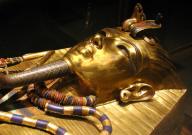
Egypt unveils pharaonic embalming bed


An ancient pharaonic embalming bed was unearthed from a mysterious tomb near Luxor


Egyptian antiquities authorities on Thursday revealed an ancient pharaonic embalming bed unearthed from a mysterious tomb near Luxor used to prepare bodies for mummification more than 3,000 years ago.

The wooden bed was painstakingly restored after being discovered in pieces in the KV-63 tomb in southern Egypt's famous Valley of the Kings, next to Tutankhamun's tomb, the Supreme Council of Antiquities said in a statement.

The bed, featuring carved heads of a lion and a lioness at its foot, slopes downwards five centimetres (two inches) from head to toe to help drain bodies being prepared for mummification.

Bodies had their organs removed as soon as possible after death, including the brain which was thrown away as it was thought to serve no purpose in the afterlife.

The heart was left in the body, with other organs cleaned, perfumed and preserved in jars to be buried with the mummy.

Afterwards, the corpse spent 40 days on the bed for draining of fluids, and another 15 days being bandaged.

Antiquities supremo Zahi Hawass said in a statement that the 170-cm- (68-inch-) long bed had been reconstructed from pieces of wood found scattered around tomb KV-63.

Luxor antiquities director Mansour Bouriq told AFP that unlike most beds found in tombs, this one was not ceremonial but actually used for embalming.

"We believe this was a room used for embalming because we found some embalming materials, including herbs, oils and pottery vessels," he said.

Tomb KV-63 was discovered by Egyptian and US archaeologists in 2006, the first to be found in the area in more than 80 years.

It is believed to date from the 8th dynasty (1570-1304 BC), although there was no mummy found inside to enable the tomb to be dated more precisely.

Scientists aim to replicate the Sun


Scientists in California say they're trying to replicate the power of the sun by firing laser beams at a tiny pellet of hydrogen.

Physicists at the National Ignition Facility in Livermore say the nuclear fusion experiments may offer the world a clean source of energy, The Times of London reported Sunday.

The hydrogen pellet will be hit with 192 laser beams capable of generating 500 trillion watts -- 1,000 times the power of the U.S. national grid, said the scientists.

"We hope the ignition experiments will show that we can generate more power than we put in and that fusion can be the source of a supply of carbon-free energy," said Ed Moses, director of the facility.

Science is at least 25 years away from building fusion power stations that could provide a clean alternative to fossil fuels. Those power stations would use hydrogen atoms extracted from sea water as fuel to generate carbon-free electricity with minimal radioactive waste, Moses said.

Motorcyclist recalls massive triangular UFO


A man and his wife were witness to a silent, low level, massive triangular-shaped UFO just 100 yards overhead along a rural road near a small mountain town in North Carolina.

The then 34-year-old man and his 21-year-old wife were buzzing along on his Yamaha Virago 920 when they first noticed a red light closing in on them.

The witness recently contacted me to share this most interesting story from 1986.

Following is the original story from the witness. Only minor editing was completed.

In early ( March) of 1986 we were married about 6 months and living in a cabin in Jackson County, NC in the Adie community. The road leading home is the Old Sylva Hwy; a 2 lane country road, and it was about 11 p.m. that night.

There was no other traffic, which was normal at that hour, and we were slowly cruising home on my motorcycle. Just past the beer distributor (Bud), I looked up at the night sky and noticed that a red light was just coming over head; it was so close overhead that I was startled. I pulled the Yamaha over to the side of the road and we pulled our helmets off.

Coming from south to north was a triangular craft, with a red light at each tip. It was no more than about 100 yards above us, and the red lights were at least 100 yards in between each one, forming a perfect triangle. It was massive...huge. I was experiencing a gut fear; it looked so heavy, so massive, that I was having a primal fear that if it set straight down we would be reduced to a smear on the ground. I recall thinking, "My God, I could hit it with a pistol!!" and then "I could hit it with a strong bow!!" Thats how low it was.

I could not see the sky between the lights, but could not make out a definite outline of the craft either...but the red lights never varied in position and were traveling "flat," meaning that one red light was at the "front" of the thing and the other two were at the rear...it was moving north.


Just to make sure that I was not having some mental issue, I began immediately asking my wife to tell me what she was seeing...doing a "reality check" of sorts, to make sure that I was not misinterpreting what was happening. But, she was seeing exactly the same thing and related it perfectly in accordance with what i was seeing.

The craft came over us

The craft was totally silent. No noise at all. It was moving very slowly, maybe 5-10 mph at most, just "drifitng" over us, if something that looked as if it weighed a million tons could "drift." It had a "feeling" about it; not bad, but intelligently controlled. I could "feel" that it was occupied and flown purposefully. The craft came over us and began moving slowly away to the north.

Illustration by Matthew Whiting.


It gained in altitude as we watched, and at a point when it was perhaps 500 feet up or so, it STOPPED, TURNED THE ONE FRONT FACING RED LIGHT UP TO THE TOP OF THE ARRAY, WITH THE OTHER TWO AT THE BOTTOM, AND CARTWHEELED OFF INTO THE EASTERN SKY!!!

That really blew us away. We were stunned and began talking about how the occupants had "buzzed" us intentionally. It seemed to us that the craft had spotted a lone motorcycle on the road and decided to play with us a bit. There is no way that this was not done with purppose.

Had the lights been off, we would no doubt have not seen anything. Had the craft not come so low that it caused a fear reaction, we might not have been attracted to it in such detail; it was as if it WANTED to be seen, and the cartwheeling at the end was a sort of "goodbye" from the operators, whom I imagined were having a good laugh at how we must be changing our drawers after such an event!!

I would be happy to relate this to someone that could plot the event on paper, and it was for sure one of the the most incredible things ever to happen to us. I had about an entire 90 seconds to experience this after we stopped until it was totally out of sight, so I got a good look at the thing. I have no idea as to who was operating it, but my gut tells me it was anti-grav for sure, probably back engineered and likely flown by humans.

I did not get the feeling thru this that we were being surveilled by aliens; rather, it seemed to be a goof, someone blowing a couple of motorcyclists minds for a laugh. At least, that's the impression I got. The cartwheeling was no doubt intended to be seen and it was so unusual that it could only be attributed to a purposeful event.